
 Admin
Admin  Admin
Admin 
By: Laiba Shafa
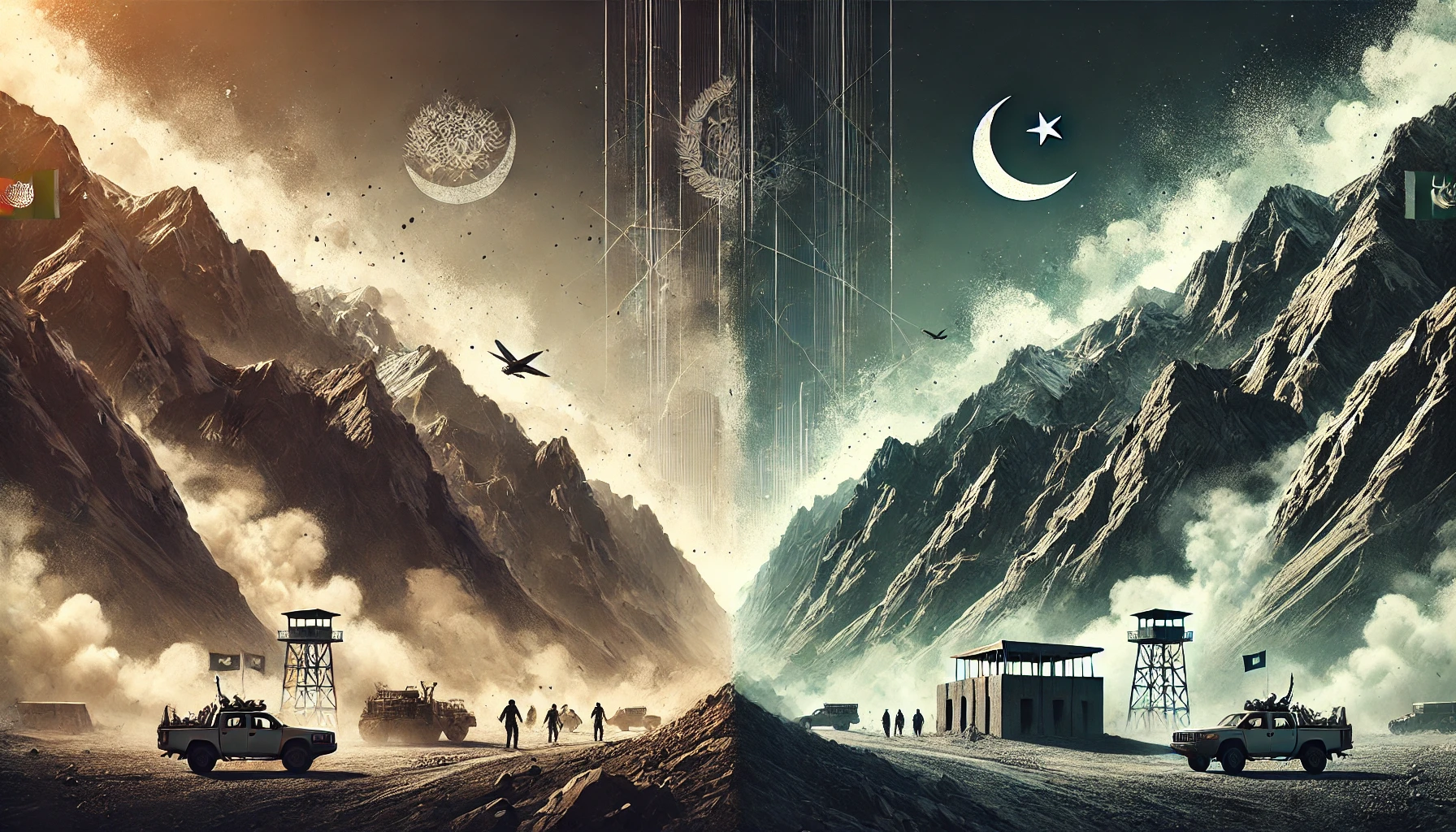
Every few months, Pakistan and Afghanistan find themselves caught up in the same crisis: cross-border terrorism, accusations, and denials. The faces in power may have changed over the years, but the script remains the same. What has unfolded amid recent Pak-Afghan crisis, is not merely a border-management issue, it is a strategic dilemma that will define Pakistan’s security outlook for years to come.
Recently, a series of deadly attacks inside Pakistan, many attributed by officials to TTP networks operating from Afghanistan, have once again brought the spotlight back on Kabul’s responsibility. The anger at home is real. Pakistan has lost soldiers, policemen, and civilians in regions already battered by decades of militancy. When checkpoints, residential areas, and security convoys are hit repeatedly, public patience decreases. A state cannot tolerate hostile actors carrying out attacks from across an undefended frontier, for much longer.
But Kabul’s counter-narrative is equally forceful. The Taliban government accuses Pakistan of heavily impactful responses, including alleged strikes that killed civilians, according to Afghan Taliban, a claim Islamabad firmly denies. The atmosphere is thus charged, and it is important to note that both states feel threatened and misunderstood.
The question arises if this is a crisis built on mismatched expectations?
Pakistan’s expectation from the Taliban has been simple and clear, that is, eliminate TTP sanctuaries, prevent cross-border attacks, and fulfil commitments made during the Doha transition. But for Kabul’s rulers, cracking down on their ideological cousins with whom they share tribal, religious, and strategic histories is a political minefield. The Taliban leadership likely fears internal fractures, or the emergence of rival factions if they take an aggressive action against TTP.
These asymmetrical priorities has produced a paralyzing stalemate. Pakistan believes Afghanistan is not doing enough. Afghanistan believes Pakistan is demanding too much, too quickly. The output emerges as a dangerous vacuum in which militant groups thrive.
There are three reasons why today’s tensions carry greater risk than former crisis.
First, both sides are operating with a heightened sense of vulnerability, both internally and to some extent, externally as well. For instance, Pakistan is navigating a stressed economy, political volatility, and rising security demands, owing to internal fragility due to Afghan Taliban and external vulnerability due to Pak-India skirmishes in May 2025. Afghanistan, meanwhile, is internationally isolated, economically fragile, and internally divided. This, weak states make insecure decisions.
Second, the border is far more militarized than in the early 2000s, yet still porous enough for militants to slip through. More fences and more patrols do not make up for missing political coordination.
Third, public anger is sharper and quicker. Videos, statements, and claims spread across social media at lightning speed. Within hours, regional tensions turn into nationalist outrage. In this hyper connected environment, even a small incident can spiral into a diplomatic crisis before officials can respond.
Whatever the triggers maybe, civilians are the major casualties on both sides. Afghanistan’s eastern provinces have witnessed casualties following alleged cross-border fire. Similarly, Pakistan’s border districts continue to struggle with fear and disruption when security operations intensify. For families living on the margins, every new wave of tension means lost livelihood, lost schooling, lost stability. The politics of borders rarely accounts for the human lives caught in between.
Is there a way out?
Neither side can resolve this crisis alone unless both governments pursue a shared framework. That must, favorably, include: A verifiable security mechanism from Pakistan’s side to assure Afghanistan that TTP sanctuaries are being dismantled, not relocated. Afghanistan needs assurance that Pakistan will not resort to unilateral strikes.
Active political engagement as talks cannot begin only after a bombing or a border clash. Both countries need a standing, continuous channel including intelligence coordination, and regular border meetings.
International mediation without international interference. Regional countries that both Islamabad and Kabul trust, possibly Qatar, China, or Saudi Arabia, can act as mediators. There job should not be to dictate policy, but to ensure that commitments are honored.
At this stage, Pakistan and Afghanistan need something rarer than military strength, that is, strategic patience. The temptation to “teach a lesson” or “respond in kind” seemingly appeals on social media, but it accomplishes little in the real world. Both countries have bled far too much to stumble into yet another cycle of hostility.