
 Huriya Shakeel Qureshi
For more than eight decades, nuclear deterrence has been regarded as a fundamental pillar of global security. Rooted in the doctrine of Mutually Assured Destruction (MAD), nuclear deterrence is designed to prevent major wars between powerful states by ensuring that any nuclear attack would result in catastrophic retaliation. There are 9 nuclear-armed states in the world, including the US, UK, China, Russia, Pakistan, India, North Korea, Israel, and France. About 90% of nuclear weapons belong to the US and Russia. Around 12,000 to 13,000 warheads exist worldwide. Current data indicates that the US maintains an estimated 5,117 nuclear warheads as of early January 2025.
In today’s complex geopolitical environment, major powers face persistent political tensions and strategic rivalries across multiple domains. In this context, a crucial question emerges: Is nuclear deterrence still effective in preventing major wars? Modern nuclear weapons possess unprecedented destructive capacity; even a minor miscalculation can lead to massive devastation and annihilate entire cities. In Europe, during the ongoing war between Russia and Ukraine (2022–present), Moscow has repeatedly issued nuclear warnings. However, 32 states rely on the North Atlantic Treaty Organization (NATO) nuclear umbrella, and all states have carefully avoided direct military confrontation with Russia. This shows that nuclear deterrence continues to shape state behavior and remains influential in the modern international system.
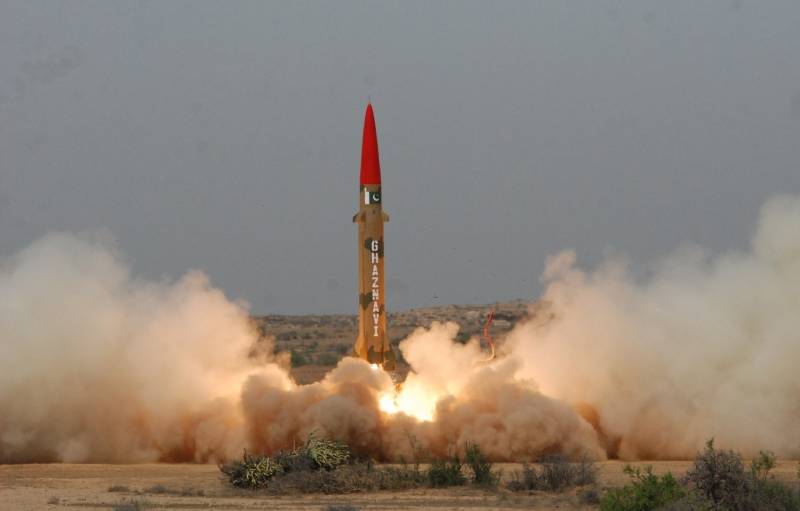
If we look at history, the Cold War signaled the start of nuclear deterrence between the US and the USSR after 1945. Both states developed massive nuclear arsenals, yet neither state engaged in a direct, full-scale conflict with each other. The idea of Mutually Assured Destruction (MAD) made the cost of conflict unacceptably high for both sides. In South Asia, rivalry between Pakistan and India also reflects the logic of nuclear deterrence. Although both countries possess nuclear weapons and have experienced serious crises, the presence of nuclear weapons has contributed to both states avoiding a large-scale conventional war.
There has been no nuclear war since 1945, after the incidents of Hiroshima and Nagasaki, which shows the effect of deterrence. Major wars are still prevented because nuclear-armed states are protected from direct, full-scale conflict by the threat of massive retaliation. Despite crises like the Kargil War, India and Pakistan, both possessing nuclear weapons since 1998, avoided full-scale conflict. Additionally, some states have a “No First Use” (NFU) policy, which commits them to refraining from using nuclear weapons unless they are first attacked. Furthermore, 191 states have joined the Treaty on the Non-Proliferation of Nuclear Weapons (NPT) in 1968, making it widely adopted internationally. It aims to preserve strategic stability among major powers by restricting the number of nuclear-armed states. The NPT is frequently seen as an adjunct to deterrence.
In my view, as long as no full-scale war occurs between nuclear-armed states, nuclear deterrence can be considered effective. The recent incident between Pakistan and India occurred in May 2025, when both countries fought a four-day conflict after a deadly attack in Kashmir. India launched strikes, and Pakistan retaliated with Operation Bunyan‑ul‑Marsoos. However, both states avoided full-scale war because they knew the cost of destruction. It shows that nuclear deterrence is still effective today because prolonged conflict is avoided by the fear of catastrophic outcomes. Henry Kissinger wrote the book Diplomacy in 1994. In his book, he highlights that the absence of war between major powers is the principal achievement of nuclear deterrence. This perspective strongly supports my argument that nuclear deterrence continues to function. Since the end of the Cold War, there has been no large-scale military confrontation directly between nuclear-armed states, despite political tensions and regional rivalries. Therefore, the continued absence of direct great-power war serves as practical evidence that nuclear deterrence still operates as a stabilizing force in international politics.
In conclusion, nuclear deterrence is still a complicated but powerful factor in world affairs. Fear of devastating reprisal has prompted nuclear-armed governments to exercise prudence, as seen in the Cold War rivalry between the US and the USSR and in the current tensions between Russia and NATO. The ongoing lack of direct, large-scale conflict between major powers indicates that nuclear deterrence, despite its shortcomings, continues to function as a stabilizing force in the international order, even though the risks remain grave.
The writer is currently pursuing her BS in International Relations from National University of Modern Languages (NUML), Islamabad.