
 Admin
Admin 
How the Afghan Taliban Took Power in Kabul
On August 15, 2021, after the withdrawal of the United States Forces from Afghanistan, the Afghan Taliban immediately regained power and established their government in Kabul. The withdrawal of US Forces was a result of an agreement between the US and the Afghan Taliban, signed in February 2020 in Doha, during the then-President Donald Trump’s administration.
According to the “Agreement for Bringing Peace to Afghanistan” or “Doha Accords”, it was planned that the US Forces will leave the region by May 1, 2021. When President Joe Biden joined the office, he decided to uphold Trump Administration’s agreement with the Afghan Taliban but extended the deadline of withdrawal of US Forces by September 11, 2021.
However, the Afghan Taliban showed limited commitment to the Doha Agreement by favoring a military approach over intra-Afghan dialogue. They captured Kabul on August 15, 2021, without a negotiated settlement with the then US-supported Afghan government, leading to the Afghanistan
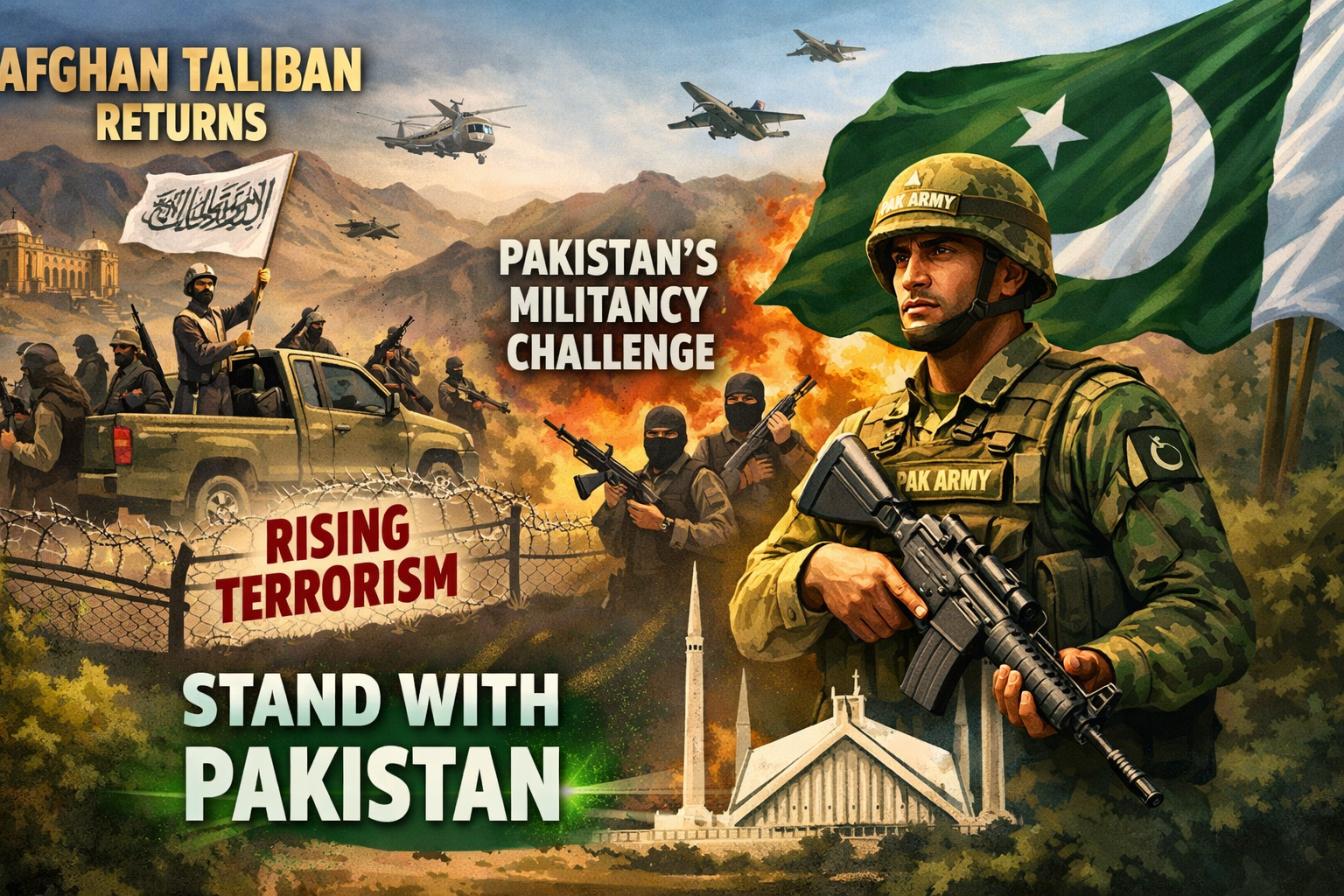
The day when the Afghan Taliban entered Kabul, the then Afghan President Ashraf Ghani left the country, leading to the collapse of the Afghan. This consequently created a significant power vacuum inside Afghanistan in which terrorist groups reorganized themselves swiftly. Terrorist groups like TTP and Al-Qaeda etc got more permissive environment under Taliban 2.0. A notable incident in this regard includes two suicide bombings on August 26, 2021, that killed thirteen US Soldiers and 169 Afghans. Later, the Islamic State Khorasan Province (ISKP) claimed the responsibility of the attacks. In another significant development, on July 31, 2022, the Al-Qaeda leader Ayman al-Zawahiri was killed in a drone strike orchestrated by the US, which further raised concerns over the Afghan Taliban’s rule in Kabul. One notable terrorist group which also gained greater operational strength was Tehreek-e-Taliban Pakistan (TTP). Tehreek-e-Taliban Afghanistan (TTA) released thousands of TTP militants from jails, including their Deputy, Molvi Faqir Muhammad. Besides, TTP militants also enjoyed greater freedom of movement inside Afghanistan while having full control of advanced US left weaponry.
In short, Afghanistan became a safe haven for TTP militants, and the group got strengthened under TTA protection and restarted its militant activities in Pakistan with new methods.
Nature of Terrorism in Pakistan
Under the Taliban 2.0, Pakistan experienced greater border escalations and terrorist attacks, especially by TTP. TTP not only rejuvenated in the shadow of TTA, but the group also changed its strategy. It started following TTA’s insurgency model. They improved their propaganda tools and techniques. Their operational strength multiplied by mergers and alliances with other terrorist groups. It is pertinent to mention here that since 2020, more than 60 terrorist outfits have taken oaths of allegiance to TTP’s Chief Noor Wali Mehsud. In the process, they shifted from indiscriminate attacks to discriminatory targets on security personnels.
It would be right to say that the nature of terrorism has shifted drastically over the past few years. Since 2021, Pakistan has been suffering from extremist violence across the country in forms of suicide bombings on security personnel, law enforcement agencies, security checkpoints and key institutions, as well as in public and political gatherings, especially in Khyber Pakhtunkhwa (KPK) and Balochistan.
Pakistan Responses
In late September- early October 2021, the State of Pakistan under the administration of Prime Minister Imran Khan, sought negotiations with the TTP leadership for reconciliation but it never culminated into a formal agreement. The peace deals occurred twice between Pakistan and TTP; first in 2021 and second in 2022. Pakistan put forth three conditions to the TTP.
- They must disarm themselves and relinquish their weapons.
- They must respect and abide by Pakistan’s constitutional framework.
- They must renounce violence and pursue their objectives through peaceful means.
In 2025, after the deadliest border clashes with Afghanistan, the first international mediation talks happened in Qatar. However, Pakistan and Afghanistan representatives were unable to reach on a final agreement.
Why the Negotiations Failed?
These deals survive only for a short period of time as TTP never work on Pakistan’s demands and blatantly violated deal terms and conditions. They continually targeted law enforcement agencies in southern KPK and Newly Merged Districts. It also killed more than 1500 tribal leaders (Maliks) in the tribal districts of KPK. The major reason for failed negotiations is the approach of TTA towards TTP. The Afghan Taliban are stepping away from their pledge to take measures against TTP on their soil. Moreover, Pakistan is unable to persuade TTA to take measures against the TTP. On January 8, 2026, Turkey announced its withdrawal from the mediation role between Afghanistan and Pakistan over deep disagreements between them.
Costs that Pakistan Pays
Pakistan is paying a huge cost for broken peace deals. Every passing year, the death toll increases from the previous year. In 2024, TTP became the fastest growing terrorist outlet. In the first three quarters of 2025, the deaths were nearly equal to total fatalities in 2024. In 2025, the Global Terrorism Index (GTI) report placed Pakistan as the second most affected country by terrorism.
Causes of Ineffective Counter Terrorism Strategy
TTP has emerged as a major security challenge for Pakistan. Afghan Taliban are not seriously taking Pakistan’s reservations. Pakistan had conveyed its concerns about TTP militancy several times to the Afghan Talibans but they reject the presence of TTP across the border areas and label this concern as an internal security matter of Pakistan. They reject Pakistan’s claims of TTP militant operations executed from Afghan soil.
The Afghan Taliban had pledged in the Doha Accords to take effective counter-terrorism measures while not allowing their soil for terrorist-related activity or training. Despite their pledges, they remained completely ineffective in taking effective measures against terrorist outfits, especially in the case of TTP. The only role they played was facilitating negotiations with the TTP leadership.
The Afghan Taliban might be reluctant to take action against TTP, as they once enjoyed the historic support of TTP against the common enemy US. Additionally, both share several commonalities. Both are ideologically aligned and both share tribal, cultural and ethnic commonalities.
Way Forward
Domestically, military operations and kinetic actions are insufficient to counter militancy. Therefore, comprehensive deradicalization initiatives must be urgently implemented, particularly in Khyber Pakhtunkhwa (KPK) and Balochistan. The state should prioritize engaging local communities and addressing their grievances to weaken the roots of extremism.
At the state level, Afghanistan and Pakistan need to build friendly ties by prioritizing shared areas of interest. For that matter, Pakistan can leverage common Pashtun culture and norms in establishing cordial relations with Taliban 2.0. Instead of spending heavily on security walls, Pakistan needs to develop confidence-building measures as people on both sides of the border share same food, clothing and communication styles. Both countries should ensure border security through collective border management and intelligence sharing. In parallel, economic incentives should be offered to the Afghan Taliban government in exchange for actionable intelligence on terrorist hideouts and collaboration in dismantling militant networks. Severing ties or neglecting the Afghan Taliban is not a viable option.
Author: Junaid Ashraf is a research intern at the Centre for Countering Terrorism and Violent Extremism Studies (CCTVES), Institute of Regional Studies (IRS) Islamabad. He can be reached at junaid.bsir1391@iiu.edu.pk and junaidashrafkhattak787@hotmail.com.