
 Naina Choudary
  Naina Choudary
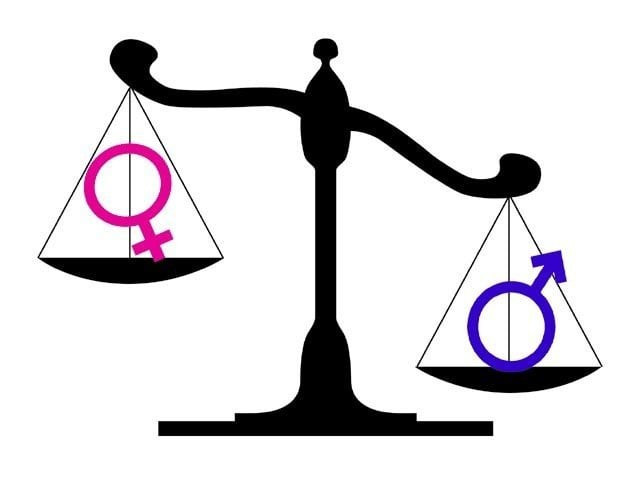
For decades, the modern workplace has been portrayed as a merit-based space, one where education, talent, and hard work determine professional success. Yet, reality often tells a different story. Despite the remarkable progress women have made in education and public life, professional environments across the world continue to reflect persistent gender inequalities. Women are entering universities in increasing numbers and are contributing significantly to economic and intellectual life, yet the path toward leadership and equal opportunity remains uneven.
What makes this disparity particularly troubling is that it persists even in societies that openly advocate equality. According to the World Economic Forum’s Global Gender Gap Report, roughly 68–69 percent of the global gender gap has been closed, leaving nearly one-third of gender equality still unachieved. More importantly, economic participation and leadership representation remain among the areas with the slowest progress. At the current pace, full gender parity could take over a century to achieve.
However, gender inequality in professional life is not limited to wage gaps or underrepresentation. It is deeply connected to broader patterns of gender-based violence, which operate in both visible and invisible forms. Direct violence is perhaps the most visible dimension. Workplace harassment, intimidation, and discriminatory treatment create hostile environments that discourage women from pursuing professional ambitions. Such experiences not only damage individual confidence but also reinforce the perception that certain spaces are inherently unsafe for women.
Yet, the issue runs deeper than overt harassment. Many professional barriers arise from structural or indirect violence, which is embedded within institutions themselves. Structural violence manifests through biased recruitment practices, unequal promotion systems, and workplace cultures that assume leadership is naturally male-dominated. Unlike direct harassment, these barriers are subtle and often normalized. As a result, women may enter organizations in considerable numbers, but their presence gradually declines at higher levels of management and decision-making.
Global statistics clearly illustrate this pattern. Women remain significantly underrepresented in senior executive positions and corporate leadership roles. Even in countries with progressive gender equality policies, the proportion of women in top decision-making positions remains relatively low. The absence of female leadership not only limits professional diversity but also affects the types of policies and workplace reforms that organizations prioritize.
Pakistan presents a particularly revealing example of these challenges. Over the past two decades, women’s access to higher education has improved considerably. Recent estimates suggest that around 45 percent of university students in Pakistan are female, reflecting growing educational opportunities. Yet, this progress has not translated proportionally into professional participation. Women’s representation in the formal labor force remains around 24 percent, which is one of the lowest rates in the region.
This disparity is partly rooted in cultural expectations surrounding gender roles. In many communities, women are still expected to prioritize domestic responsibilities over professional ambitions. As a result, even highly educated women often encounter social pressure that limits their career choices or discourages long-term professional engagement. Economic inequality further reinforces these structural barriers. Studies indicate that women in Pakistan earn approximately 30–33 percent less than men on average, highlighting a persistent gender pay gap across sectors. This gap is not merely a matter of salary differences; it reflects deeper institutional patterns that limit women’s access to leadership positions and high-paying professions.
Another dimension of gender disparity lies in the limited representation of women in STEM fields, science, technology, engineering, and mathematics. These disciplines are central to technological advancement and economic growth, yet women remain underrepresented due to persistent stereotypes and limited mentorship opportunities. Encouraging female participation in STEM is, therefore, not only a matter of representation but also an important step toward strengthening national innovation and economic competitiveness. The disparities become even more visible when geographical and socioeconomic differences are considered. Urban women generally have greater access to education, healthcare, and professional networks. In contrast, many rural women face limited educational opportunities and restricted mobility due to social and cultural constraints. These structural inequalities create a cycle in which economic dependence and limited professional opportunities reinforce one another.
Despite these challenges, there are also encouraging signs of change. Civil society movements and advocacy initiatives have increasingly challenged the normalization of workplace discrimination and gender-based violence. Campaigns such as the Aurat March and the broader #MeToo movement in Pakistan have brought attention to issues such as workplace harassment, wage inequality, and gender discrimination. By encouraging women to speak openly about their experiences, these movements have helped initiate important national conversations about professional equality. Importantly, the argument for gender equality is not merely moral; it is also economic. Numerous studies indicate that organizations with gender-diverse leadership are more innovative and financially successful. When women participate fully in professional life, businesses benefit from broader perspectives and more inclusive decision-making processes. In other words, gender inclusion strengthens both institutional performance and national economic growth. Interestingly, this idea was emphasized decades ago by Muhammad Ali Jinnah, who stated:
“No nation can rise to the height of glory unless your women are side by side with you.”
This statement remains remarkably relevant today. Jinnah’s words recognize that national development cannot occur while half of the population remains marginalized from economic and professional participation.
Ultimately, the persistence of gender disparity in professional life reflects a complex interaction between cultural norms, institutional structures, and economic inequalities. Both direct forms of gender-based violence, such as harassment, and indirect structural barriers continue to shape women’s professional experiences. Addressing these challenges requires more than symbolic commitments; it demands meaningful policy reforms, institutional accountability, and a broader cultural shift toward gender equality. Until workplaces truly value talent regardless of gender, the promise of equal opportunity will remain incomplete. A genuinely inclusive professional environment is not simply a matter of fairness; it is essential for economic progress, social stability, and national development.