
 Admin
Admin  Admin
Admin 
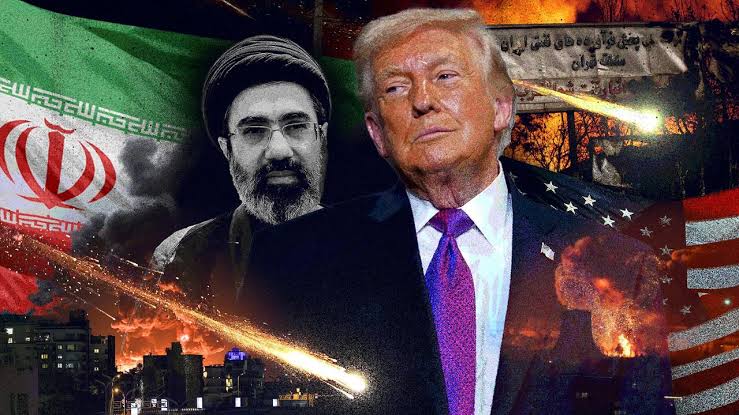
President Donald Trump is reportedly weighing a dramatic expansion of U.S. military operations in Iran, with discussions focusing on intensified airstrikes, possible attacks on key nuclear-linked facilities and strategic operations around the Strait of Hormuz. As tensions continue to rise, senior U.S. officials say the White House is reviewing options that could significantly widen the conflict, including targeting Iran’s vital oil infrastructure, the heavily fortified Pickaxe Mountain complex and even considering operations involving Kharg Island, a critical hub for Iranian crude exports. The reported plans come amid ongoing U.S. strikes on Iranian military positions and renewed concerns over global energy security and regional stability.
According to officials familiar with the discussions, President Trump received multiple military options during a Situation Room meeting centered on increasing pressure on Tehran after existing efforts failed to change Iran’s posture. The proposals reportedly include expanding the current air campaign, striking additional military and strategic infrastructure, targeting energy facilities and examining operations aimed at reducing Iran’s ability to interfere with shipping through the Strait of Hormuz, one of the world’s most important maritime trade routes.
Over the past several days, U.S. forces have reportedly carried out strikes against Iranian military positions along the Strait of Hormuz, including Greater Tunb Island, which has been used by Iran’s military as an operational base. Officials say the campaign is designed to weaken Iran’s missile launchers, radar systems and coastal defence capabilities that could threaten commercial vessels passing through the strategic waterway. Military analysts note that degrading these systems could also create conditions for broader military operations if Washington decides to escalate further.
Among the options reportedly under consideration is a strike on Pickaxe Mountain, an underground complex that Western analysts believe may be connected to Iran’s nuclear programme. Satellite imagery examined by the Institute for Science and International Security suggests the site contains multiple tunnel entrances leading to facilities estimated to be more than 100 metres beneath the mountain, protected by hardened infrastructure and extensive security measures. The International Atomic Energy Agency has previously noted that Iran announced plans to move some of its most sensitive nuclear activities underground as part of a broader strategy to protect them from potential attacks.
Another option reportedly discussed involves Kharg Island, which handles the vast majority of Iran’s crude oil exports. Although President Trump has indicated that any potential ground campaign could be carried out by partner forces rather than the United States alone, military experts caution that any attempt to seize or occupy Iranian territory would represent a major escalation. Kharg Island’s strategic importance makes it a valuable target, but its proximity to the Iranian mainland would also expose any attacking force to sustained missile, drone and artillery threats.
The Strait of Hormuz remains at the centre of the current crisis because nearly one-fifth of the world’s oil supply passes through the narrow waterway. U.S. officials argue that recent military operations are intended to safeguard freedom of navigation and reduce Iran’s ability to disrupt commercial shipping. However, defence analysts warn that suppressing Iran’s coastal defences would likely require continuous military operations, as many of Tehran’s missile batteries, radar systems and drone launch sites are mobile or located further inland.
Security experts say the United States possesses the military capability to seize smaller Iranian islands through combined naval, air and amphibious operations, but maintaining control would require significant manpower, logistics and long-term military commitment. Analysts estimate that thousands of troops would be needed to secure captured territory while defending against persistent Iranian counterattacks. They also argue that Iran could continue threatening maritime traffic from the mainland even if some islands were occupied, limiting the overall strategic value of such operations.
President Trump has continued to send mixed signals about the path forward. While he has suggested that Iran wants to negotiate and reach a settlement, he has also warned that military action could intensify if diplomacy fails. Vice President JD Vance, who has played a role in diplomatic contacts with Tehran, recently argued that military force alone cannot resolve the conflict, saying that while airstrikes can degrade Iranian capabilities, a lasting solution ultimately requires negotiations.
Analysts warn that any expansion of U.S. military operations in Iran would carry significant regional and global consequences. A broader conflict could trigger further attacks on shipping in the Strait of Hormuz, increase pressure on U.S. military bases across the Middle East, disrupt global energy markets and push oil prices higher. While reports indicate that multiple military scenarios are under active review, officials stress that no final decision has been publicly announced, leaving both allies and adversaries closely watching Washington’s next move.