
 Huriya Shakeel Qureshi
  Huriya Shakeel Qureshi
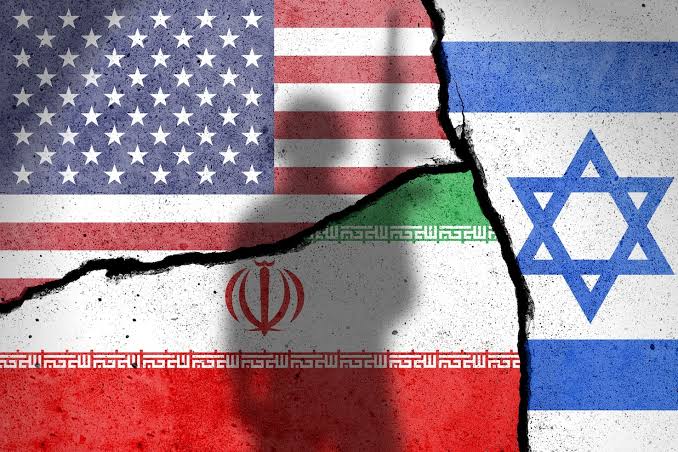
The US-Iran conflict has entered another dangerous phase, highlighting the fragility of recent diplomatic progress and the growing risk of wider regional instability. The Memorandum of Understanding (MOU) agreement signed on 17 June 2026, following mediation efforts by Pakistan and Qatar with support from Oman and Switzerland, aimed to extend the April ceasefire, facilitate the gradual reopening of the Strait of Hormuz, and establish a 60-day roadmap for negotiations on broader security concerns, including Iran’s nuclear programme. However, the latest exchange of military strikes has pushed both states toward a prolonged confrontation. The renewed escalation underscores the collapse of mutual trust, unresolved strategic rivalries, and the expanding involvement of regional actors in the conflict.
The immediate catalyst for the latest escalation was the United States’ decision to launch another large-scale military operation against Iran. The US Central Command (CENTCOM) announced that it had conducted coordinated strikes against dozens of military targets across Iran, employing fighter aircraft, naval assets, one-way attack drones, and, for the first time, one-way attack maritime drones. According to CENTCOM, the operations primarily targeted Iran’s air defence networks, coastal radar installations, military infrastructure, drone capabilities, and fast-attack naval vessels. Washington stated that the primary objective of the operation was to degrade Iran’s ability to threaten commercial shipping through the Strait of Hormuz, one of the world’s most strategically important maritime chokepoints. The Strait facilitates the movement of approximately 20% of global oil consumption and a significant share of global liquefied natural gas (LNG) shipments, making its security essential for international energy markets and global trade.
According to Iranian authorities, the U.S. military campaign expanded across southern Iran, with strikes reportedly targeting at least eight cities in Khuzestan Province, including Mahshahr, where one security official was killed and four civilians were injured at a water facility. Iranian media subsequently reported additional strikes near Bandar Abbas, Bushehr, Sirik, Chabahar, Ahvaz, Konarak, Rask, and Qeshm Island. Areas surrounding Abadan, home to one of Iran’s oldest oil refineries, were also reportedly affected. Iran’s Ministry of Health stated that at least 35 people were killed and more than 300 wounded during the continuing attacks, while Iranian sources confirmed that seven members of the 388th Brigade were killed following a strike on a military barracks in Bampour.
In retaliation, Iran launched coordinated military strikes across the Gulf region, significantly expanding the geographical scope of the confrontation. The Islamic Revolutionary Guard Corps (IRGC) announced attacks against a long-range air surveillance radar facility in Bahrain, a maritime detection radar system in Oman, and U.S. surface-to-surface missile installations in Kuwait. Iranian officials claimed that missile strikes destroyed two missiles and nearby storage facilities in Kuwait. Bahrain activated emergency warning systems and advised residents to seek shelter, while Jordan intercepted several Iranian missiles that crossed its airspace. Kuwait later confirmed that it had intercepted at least four cruise missiles and 21 drones. Meanwhile, Iraq’s Kurdistan region reported multiple drone attacks near the US Consulate and nearby military installations in Erbil, demonstrating the expanding regional dimension of the conflict and the vulnerability of U.S.-linked facilities across the Middle East.
The control of the Strait of Hormuz has become the central trigger of the renewed US-Iran confrontation, transforming maritime security into a critical dimension of the conflict. Iran demanded that commercial vessels operate through routes closer to its coastline, while the United States promoted the use of alternative southern maritime routes supported by naval protection. Tehran subsequently targeted vessels using the southern route, and the Islamic Revolutionary Guard Corps (IRGC) confirmed that it had disabled two supertankers. The international maritime agency reported that the attacks resulted in the deaths of two seafarers and further intensified concerns regarding the safety of global shipping routes.
The Strait of Hormuz remains one of the world’s most strategically significant maritime chokepoints. Any prolonged disruption in this area could create severe consequences for global energy security, international trade, and oil market stability. The continued attacks on commercial vessels have increased risks for shipping companies, raised maritime insurance costs, and generated uncertainty throughout global energy supply chains.
Washington responded by strengthening measures against Iran’s maritime activities, including efforts to restrict Iranian port operations and authorize the interception of vessels linked to Tehran. The United States also disabled an oil tanker and continued military strikes against Iranian coastal military positions. These actions effectively ended the maritime confidence-building provisions established under the June MOU agreement, further weakening diplomatic efforts aimed at reducing tensions. The diplomatic framework between Washington and Tehran is now approaching collapse. President Donald Trump approved additional military operations against Iran while initially declaring that the ceasefire had ended, before later indicating that negotiations could still continue. The U.S. administration warned that further military actions could expand to include critical Iranian infrastructure, including power plants and bridges, if Tehran continued to reject diplomatic engagement.
Iranian officials accused Washington of violating the MOU agreement. Iran’s Foreign Minister Kazem Gharibabadi stated that the United States had failed to comply with its commitments, while Foreign Ministry spokesperson Esmaeil Baghaei announced that Tehran had suspended its own obligations under the agreement due to Washington’s alleged violations. Iranian Parliament Speaker and senior negotiator stated that the country’s armed forces had been granted complete freedom of action and described the confrontation as an essential and existential war with the United States. However, Iranian officials also indicated that Tehran remained open to returning to meaningful negotiations if Washington fully implemented the commitments outlined in the MOU.
The economic and energy consequences of the escalation are already becoming visible. According to shipping data, commercial activity through the Strait of Hormuz has declined significantly, reflecting growing concerns among international shipping companies regarding maritime security risks. Repeated attacks have disrupted one of the world’s most important energy corridors, increasing volatility in international oil markets, raising transportation costs, and placing additional economic pressure on countries heavily dependent on Middle Eastern energy supplies. Furthermore, discussions surrounding maritime transit costs and shipping arrangements, including President Trump’s brief proposal regarding a 20% reimbursement fee and greater cooperation with Gulf partners, highlight the extent to which energy security has become a central component of contemporary geopolitical competition. The conflict has also intensified strategic pressure on Iran’s regional environment. During Ali Al-Zaidi’s visit to Washington, Iraq and the United States pledged to strengthen economic cooperation, expand Iraq’s energy sector, and complete the withdrawal of remaining U.S. forces by 30 September 2026. Iraq is also seeking an International Monetary Fund (IMF) loan of up to $8 billion and negotiating new oil and gas agreements with Washington.
Meanwhile, US Defense Secretary Pete Hegseth urged Baghdad to dismantle Iran-aligned militias, a demand rejected by Kataib Hezbollah, which warned that it would intervene if the conflict against Iran expanded further. Iraq continues to face the difficult challenge of balancing relations with Washington while managing Tehran’s extensive political and security influence within the country. Current developments suggest that the conflict is moving toward a prolonged period of low-intensity but persistent warfare rather than an immediate return to full-scale military confrontation. Washington and Tehran continue to rely on carefully calibrated military operations designed to weaken each other’s strategic positions while avoiding actions that could trigger an uncontrollable regional conflict. However, every additional airstrike, missile attack, naval blockade, and assault on commercial shipping increases the possibility of miscalculation and unintended escalation.
Unless both sides recommit to the June MOU agreement, restore confidence-building measures, and establish a sustainable framework for negotiations regarding Iran’s nuclear programme and regional security concerns, the conflict is likely to evolve into a long-term regional confrontation. Such a scenario would further destabilize the Gulf region, disrupt global energy markets, increase economic and political pressure on neighbouring states, including Iran, Bahrain, Kuwait, Jordan, and Oman, and make any future diplomatic settlement significantly more difficult than the opportunity both sides abandoned only weeks earlier. In my opinion, the current US-Iran confrontation reflects a long-term strategic competition rather than a temporary military dispute. Both states appear determined to preserve their regional interests, strengthen deterrence, and limit the influence of their adversary through carefully controlled military actions. However, continued reliance on military pressure instead of sustained political dialogue risks creating a cycle of instability that becomes increasingly difficult to control.
Unless all parties demonstrate genuine commitment to diplomatic engagement, confidence-building measures, and compliance with negotiated agreements, the conflict risks developing into a prolonged security crisis with far-reaching political, economic, and humanitarian consequences. The current escalation demonstrates the limitations of military solutions in addressing deeply rooted geopolitical rivalries and highlights the importance of effective crisis-management mechanisms.
Ultimately, the present situation illustrates that the future security of the Gulf region cannot be achieved through military power alone but requires sustained diplomatic efforts by regional and international actors. While both the United States and Iran continue to pursue strategic deterrence to safeguard their interests, continued escalation increases the likelihood of miscalculation, expands the conflict beyond existing boundaries, and imposes significant political, economic, and humanitarian costs across the region. A sustainable resolution requires renewed diplomatic engagement, effective confidence-building measures, and full compliance with negotiated agreements. Without these efforts, the Middle East is likely to remain vulnerable to recurring instability, threatening both regional security and global strategic stability.