
 Hamna Masood
  Hamna Masood
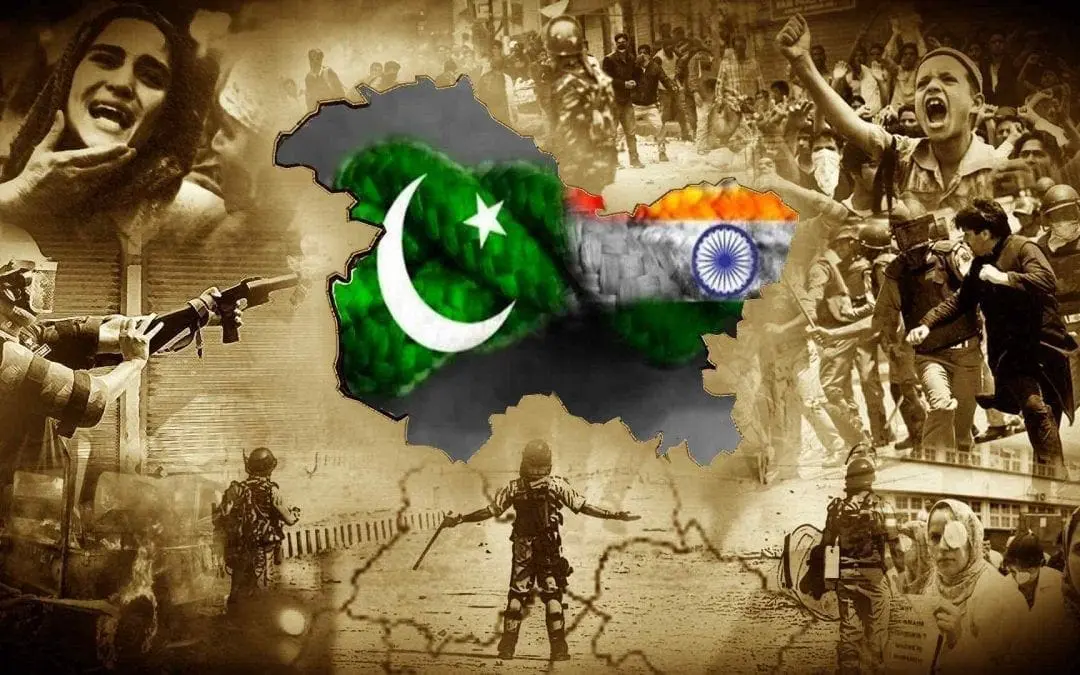
Kashmir is often described as a territorial dispute between India and Pakistan. From a Pakistani perspective, however, that description leaves out an important part of the human and political story. Kashmir is also about identity, political representation, security and the right of people to have a meaningful say in their future. The growing influence of Hindutva, a political ideology associated with Hindu nationalism, has added another layer to these tensions. Hindutva should not be confused with Hinduism, a diverse religious tradition; the concern here is the political use of religious identity and its consequences for Kashmir and regional peace.
The issue became more significant after August 2019, when India removed Jammu and Kashmir’s special constitutional status under Article 370 and reorganised the former state into the Union Territories of Jammu and Kashmir and Ladakh. India presented the change as a step toward integration, equality, development and security. Critics, including Pakistan, argued that it weakened political autonomy without resolving the underlying dispute. India’s Supreme Court upheld the changes in December 2023 and directed that elections be held and statehood restored. An elected government returned in 2024, but full statehood remained unresolved.
Kashmir occupies a particularly sensitive position because its Muslim-majority population, disputed political status and symbolic importance to both Indian and Pakistani national identities place religious identity and territorial sovereignty directly alongside one another. This is where Hindutva becomes relevant to the wider security debate. The argument is not that Hindutva caused the Kashmir conflict or explains every Indian policy. Rather, majoritarian conceptions of national identity can influence how questions of sovereignty, dissent and security are framed. When political disagreement is increasingly securitised, the space for compromise can become narrower, making an already difficult dispute more vulnerable to escalation.
The events from 22 April to 7 May 2025 demonstrated how quickly unresolved tensions around Kashmir could become a wider regional security crisis. On 22 April, gunmen attacked tourists at Baisaran near Pahalgam, killing 26 people, including 25 Indians and one Nepali citizen. The attack was widely condemned. A group calling itself The Resistance Front claimed responsibility, while Indian authorities linked the attackers to Pakistan-based militant organisations. Pakistan rejected allegations of involvement and called for a credible investigation. These competing accounts shaped the crisis that followed.
On 23 April, India announced measures against Pakistan, including putting the Indus Waters Treaty in abeyance, suspending the SAARC Visa Exemption Scheme for Pakistani nationals, reducing diplomatic representation and closing the Attari-Wagah crossing. Pakistan responded on 24 April with reciprocal measures, including closing the Wagah crossing, suspending trade with India, closing its airspace to Indian-owned or operated airlines and reducing diplomatic engagement. The crisis had moved beyond the original attack into a wider diplomatic and economic confrontation.
On 5 May, UN Secretary-General António Guterres warned that tensions were at a boiling point and that a military confrontation could easily spin out of control. This was particularly serious because India and Pakistan are nuclear-armed states. The danger also included miscalculation between two nuclear-armed states.
In the early hours of 7 May, India launched Operation Sindoor. India said it had struck nine sites it described as terrorist infrastructure in Pakistan and Azad Jammu and Kashmir (AJK). Pakistan reported attacks on six locations, including Ahmedpur Sharqia near Bahawalpur, Muridke, areas near Sialkot and Shakargarh, as well as Muzaffarabad and Kotli in AJK. Pakistani authorities reported civilian deaths and injuries. The locations and casualty figures were disputed, but the strikes marked a major expansion of the confrontation onto Pakistani territory and AJK.
Pakistan’s military response became another defining part of the crisis. Pakistani officials initially reported that five Indian fighter aircraft and an Indian drone had been brought down. Later Pakistani accounts put the number at seven Indian aircraft and one drone. These figures remained contested. Reuters reported on 8 May that two US officials assessed with high confidence that Pakistani J-10 aircraft had brought down at least two Indian aircraft, including at least one Rafale. India later acknowledged aircraft losses, although it did not accept Pakistan’s full account. The episode therefore needs to be understood through documented evidence and competing claims.
From a Pakistani perspective, the Indian strikes were experienced as a direct challenge to territorial security and sovereignty, while Pakistan’s military response was presented as an exercise of self-defence. At the same time, the confrontation demonstrated the danger of escalation. Military capability can strengthen deterrence, but it can also create a cycle of retaliation in which each side feels pressure to respond more forcefully.
The crisis also shows why the relationship between Hindutva, Kashmir and regional security deserves careful examination. When national identity is increasingly expressed through religious or civilisational language, a conflict involving a Muslim-majority region can acquire an additional communal dimension. Pakistan’s position is also complicated by longstanding international scrutiny of militant organisations operating from or associated with Pakistan, even as Islamabad rejects responsibility for the Pahalgam attack. Recognising this complexity strengthens the analysis.
The May 2025 crisis reinforced the need for effective crisis-management mechanisms between India and Pakistan. Fighting expanded from a terrorist attack into diplomatic retaliation, strikes across the border, air combat and drone activity before a cessation of military action was announced on 10 May. For Pakistan, the episode highlighted the importance of credible deterrence and air defence; for the wider region, it demonstrated how quickly deterrence can coexist with dangerous escalation.
By 2026, Kashmir has an elected political government and a changed security environment, but questions surrounding statehood, identity, representation and India–Pakistan relations remain unresolved. The lesson of 2025 is that Kashmir is not simply a historical dispute. Violence connected to Kashmir can still trigger a crisis between two nuclear-armed neighbours. Durable peace requires more than military responses: it requires political dialogue, protection of civilians, responsible national narratives and mechanisms that allow both sides to step back from confrontation. For Pakistan, Kashmir remains closely connected to security, identity and self-determination; for the region, managing the dispute remains essential to preventing another dangerous escalation.
Sources
- UK House of Commons Library, “Kashmir: Renewed India-Pakistan tensions,” 16 May 2025.
- United Nations Secretary-General, “Secretary-General’s Press Encounter on India and Pakistan,” 5 May 2025.
- United Nations in India, “United Nations urges India and Pakistan to exercise ‘maximum restraint’,” 25 April 2025.
- Government of India, Press Information Bureau, Ministry of Defence, “Operation Sindoor,” 7 May 2025.
- Government of Pakistan, Ministry of Foreign Affairs / Prime Minister’s Office statements on the 7 May 2025 strikes.
- Reuters, “Pakistan’s Chinese-made jet brought down two Indian fighter aircraft, US officials say,” 8 May 2025.
- Reuters, reporting on the May 2025 India-Pakistan ceasefire and subsequent aircraft-loss claims.
- Dawn, reporting on Pakistan’s later claim of seven Indian fighter jets downed during the May 2025 conflict, 19 May 2026.