
 Huriya Shakeel Qureshi
  Huriya Shakeel Qureshi
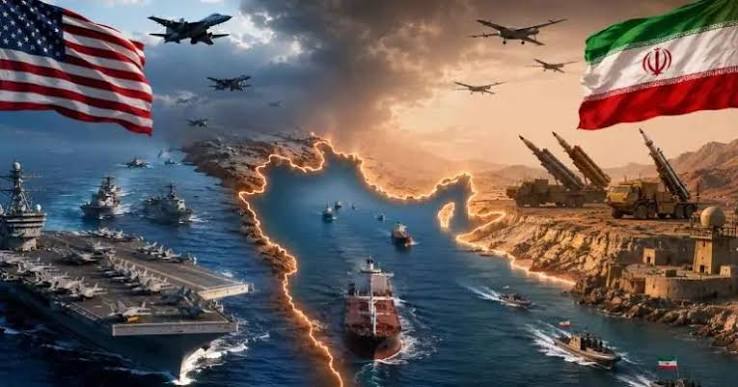
The latest week of the ongoing US–Iran conflict represented one of the most perilous phases of the conflict, with persistent military operations, maritime insecurity, intensified proxy activities, and rising political tensions collectively undermining regional stability. Although neither Washington nor Tehran achieved a decisive battlefield breakthrough, the conflict increasingly evolved into a multi-dimensional confrontation extending beyond conventional warfare. The Strait of Hormuz emerged as the epicentre of the crisis, highlighting its critical importance for global energy markets and international commerce, while demonstrating how instability in the Gulf region can rapidly generate far-reaching economic and geopolitical consequences.
During the reported week, the United States significantly intensified its military operations against Iran, expanding both the scale and geopolitical reach of its campaign. According to the US Central Command (CENTCOM), American forces conducted air operations over 14 consecutive nights, targeting military infrastructure allegedly associated with attacks on U.S. forces and commercial shipping in the Gulf region. The campaign targeted command-and-control facilities, missile launch sites, drone storage complexes, air defence systems, logistics centres, fuel storage facilities, naval assets, and communication networks. These military operations reportedly extended across Bandar Abbas, Bushehr, Sirik, Qeshm Island, Shiraz, Isfahan, Jask, Ahvaz, Khorramabad, and several other strategic locations. The sustained nature of the campaign underscored Washington’s strategy of degrading Iran’s long-term military capabilities, constraining its power projection capabilities, and safeguarding freedom of navigation through the strategically vital Gulf maritime corridor.
President Donald Trump reaffirmed that any future attacks against U.S. personnel, military assets, or international commercial shipping would be met with a significantly stronger American military response. He emphasized Washington’s determination to deter further Iranian actions and ensure the safety of US forces, warning that additional aggression by Iran and its affiliated groups would trigger a broader military response. Despite the continuing conflict, senior US officials indicated that indirect negotiations with Tehran continued through regional intermediaries. This approach demonstrated the broader US strategy of combining military pressure with sustained diplomatic engagement to manage escalation and explore possibilities for de-escalation.
Iran responded by expanding the geopolitical scope of its military operations across the Gulf region, in a significant effort to increase pressure on US forces. The Islamic Revolutionary Guard Corps (IRGC) announced that it had carried out missile and drone attacks against US military installations in Kuwait, Jordan, and Bahrain. According to reports, three US service members were killed, two in Jordan and one in Iraq during Iranian attacks.The strikes reportedly targeted radar systems, drone infrastructure, communication networks, logistics hubs, Patriot and THAAD air-defence systems, C-RAM systems, MQ-9 drones, and fuel storage sites. Although these claims have not been independently verified, the reported operations illustrate Tehran’s strategy of imposing greater operational and political costs on US military involvement by challenging its extensive regional military infrastructure rather than pursuing direct conventional battlefield gains.
The Strait of Hormuz continued to represent the most significant flashpoint throughout the reporting period. As a maritime corridor through which nearly 20% of global oil exports and a significant volume of liquefied natural gas (LNG) shipments pass, the Strait continued to face elevated risks arising from the expanding military confrontation. Iranian authorities reiterated that unrestricted commercial navigation would not resume until the United States halted its ongoing military campaign, linking maritime security directly to developments on the battlefield. During the week, multiple commercial vessels were reportedly affected by the deteriorating security environment. These incidents included Greek-owned oil tankers and another tanker that was abandoned after it caught fire near the Omani coastline. Although independent verification of some incidents remained limited, they contributed to heightened international concerns over the security and vulnerability of commercial shipping through one of the world’s most strategically important maritime choke points for global energy supplies, connecting the Persian Gulf with the Gulf of Oman and the Arabian Sea. Tehran also warned international shipping companies that vessels transiting the Strait without coordination with Iranian authorities would face heightened security risks. These developments further intensified uncertainty, drove up maritime insurance premiums and freight costs, and disrupted commercial shipping routes and global energy supply chains. The continued instability in the Strait of Hormuz remains a major concern for international trade, global energy security, and regional stability.
The maritime dimensions of the conflict expanded beyond the Persian Gulf. Yemen’s Houthi movement declared a maritime blockade directed at Saudi Arabian tankers Encelia and Layla and intensified missile and drone operations against Saudi-associated shipping in both the Strait of Hormuz and the Bab al-Mandeb Strait. The widening hostilities significantly increased threats to global energy flows and international supply chains, reinforcing the growing potential for simultaneous disruption of multiple strategically important maritime trade routes. This expansion of proxy warfare further heightened geopolitical tensions across the Middle East, increasing concerns over the security of critical international shipping lanes and global commerce.
The humanitarian situation also continued to deteriorate as Iranian officials stated that recent American airstrikes resulted in the deaths of 55 people and injuries to more than 650 others, while causing significant damage to electricity infrastructure, transportation networks, maritime infrastructure, and critical public utilities. These developments further intensified the humanitarian burden, exacerbating disruptions to essential civilian services across several affected provinces. The growing humanitarian crisis has raised international concerns regarding civilian protection, infrastructure resilience, and the long-term socioeconomic consequences of the conflict.
Domestic political divisions became increasingly visible within Iran as disagreements over the country’s wartime strategy entered the public domain. A rare public disagreement developed between President Masoud Pezeshkian’s administration and the state broadcaster Islamic Republic of Iran Broadcasting (IRIB) over the government’s approach to negotiations with the United States. Senior government officials accused IRIB of censoring statements supporting diplomatic engagement, including remarks by President Pezeshkian, Parliament Speaker Mohammad Bagher Ghalibaf, Judiciary Chief Gholam-Hossein Mohseni-Ejei, and Foreign Minister Abbas Araghchi. In response, IRIB rejected the allegations, maintaining that limiting coverage of internal disagreements was essential to preserving national cohesion and public morale during wartime. The episode highlighted broader political tensions between reformist figures advocating diplomatic engagement and hard-line factions favouring continued military confrontation. These internal political divisions reflect the growing debate within Iran over balancing national security objectives with diplomatic solutions to prevent further escalation.
Meanwhile, Iran strengthened its diplomatic engagement in an effort to prevent further regional tensions and reduce escalation. A senior Omani delegation visited Tehran to discuss maritime security, de-escalation measures, and the restoration of safe commercial navigation through the Strait of Hormuz. During the consultations, Iranian Foreign Minister Abbas Araghchi and Omani Foreign Minister Badr Albusaidi reaffirmed Muscat’s long-standing commitment to preserving open, secure, and uninterrupted international waterways while continuing to facilitate peace dialogue between Washington and Tehran. These diplomatic engagements underscored Oman’s continued role as a neutral mediator in promoting regional stability and reducing tensions in the Gulf.
Domestic political debate also intensified in the United States, where lawmakers increasingly urged the administration to reconsider the military campaign and emphasized stronger congressional oversight of military actions against Iran. Nevertheless, the White House maintained that its commitment to pursuing both military operations and diplomatic engagement would proceed concurrently until Iran ceased attacks against U.S. personnel and commercial shipping across the region. This dual-track approach reflects Washington’s broader strategy of maintaining military pressure while leaving the door open for diplomatic negotiations.
In my perspective, the ongoing U.S.–Iran conflict illustrates the classic security dilemma, whereby defensive policies adopted by one state are interpreted by the other as offensive, generating a self-reinforcing cycle of tension and escalation. The confrontation has progressively expanded beyond conventional military operations into a multi-dimensional strategic competition involving proxy conflicts, economic sanctions, cyber operations, and diplomatic contestation. As the Strait of Hormuz continues to experience instability, global energy transportation, energy security, and international supply chains remain increasingly vulnerable. Although neither Washington nor Tehran has achieved a decisive military breakthrough, continued military operations have increased the likelihood of unintended escalation and a broader regional war. Simultaneously, humanitarian consequences and domestic political divisions underscore the limitations of military solutions. In the absence of sustained diplomacy, confidence-building initiatives, and effective crisis management mechanisms, the conflict is likely to develop into a long-term regional security challenge with far-reaching implications for international peace, maritime security, and the international rules-based order. The evolving geopolitical landscape highlights the urgent need for balanced diplomatic engagement to prevent further regional instability and safeguard global economic and strategic interests.
In conclusion, the ongoing US–Iran conflict reflects a multi-dimensional strategic crisis encompassing military, political, maritime, and humanitarian dimensions. Persistent military operations, deteriorating maritime security in the Strait of Hormuz and the Bab al-Mandeb Strait, and mounting humanitarian pressures have significantly heightened the risk to regional stability. Although neither side has achieved a decisive military breakthrough, continued escalation has intensified security risks and exacerbated humanitarian challenges. Lasting stability depends on credible diplomacy, sustained political dialogue, and robust crisis-management efforts. In the absence of meaningful political engagement, the conflict is likely to remain a major source of regional insecurity, with far-reaching implications for international peace, maritime security, global energy markets, and the rules-based international order. As tensions continue to shape the strategic landscape of the Middle East, sustained diplomatic initiatives remain essential to preventing a wider regional conflict and ensuring long-term stability.