
 Syeda Arooj Fatima
  Syeda Arooj Fatima
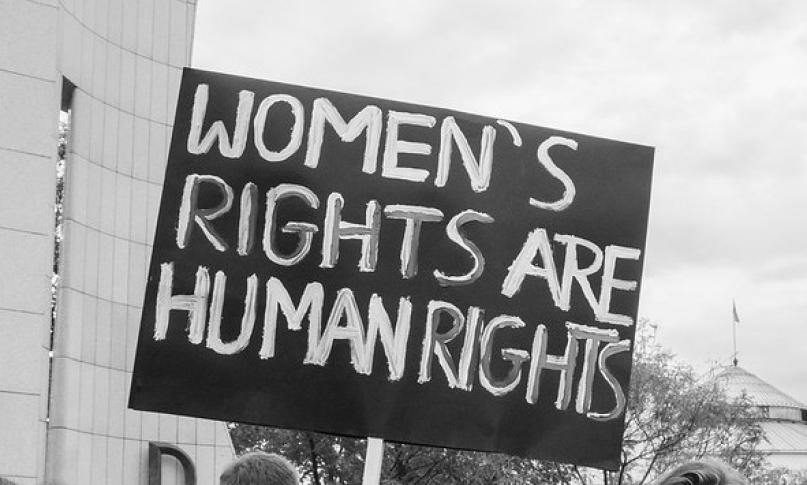
Women’s rights are often discussed as a social issue, a political slogan, or a development goal. In reality, however, they are far simpler and more fundamental: they are human rights. When a woman demands safety, education, dignity, and equal opportunity, she is not asking for special treatment, she is asking for what every human being is entitled to by birth. A society can only be considered truly progressive when its women are free to think, learn, work, and live without fear or discrimination. Unfortunately, in many parts of the world, including Pakistan and South Asia, the gap between constitutional promises and ground realities remains wide.
Pakistan’s Constitution clearly supports gender equality. It guarantees that all citizens are equal before the law and prohibits discrimination on the basis of gender. Articles 25, 34, and 35 emphasize equality, the protection of family life, and the promotion of women’s participation in all spheres of life. Reserved seats for women in legislative assemblies further ensure political representation. On paper, this framework is strong and encouraging, reflecting the state’s recognition of women as equal citizens. However, the real issue lies not in what is written in law, but in how effectively it is implemented. Laws exist, but enforcement is often inconsistent. Rights are acknowledged, yet not always respected. Justice is available, but not always equally accessible.
This commitment to equality is not only a national obligation but also an international one. Pakistan is a signatory to several key international human rights instruments. The Universal Declaration of Human Rights (1948) affirms in Article 1 that all human beings are born free and equal in dignity and rights, while Article 2 prohibits discrimination on any basis, including gender. More specifically, the Convention on the Elimination of All Forms of Discrimination Against Women (CEDAW, 1979) obligates states to eliminate discrimination against women in political, social, economic, and cultural fields. Similarly, the International Covenant on Civil and Political Rights (ICCPR, 1966) and the International Covenant on Economic, Social and Cultural Rights (ICESCR, 1966) require equal access to education, employment, and participation in public life. These frameworks reinforce that women’s rights are not optional; they are binding commitments under international law.
Despite these legal guarantees, the everyday reality for many women is shaped by inequality, cultural pressure, and limited opportunities. In urban areas, progress is visible, since women are becoming doctors, teachers, lawyers, journalists, and entrepreneurs. However, in rural and underprivileged communities, the situation remains starkly different. Many girls are still denied education due to poverty, early marriages and traditional beliefs. In regions such as rural Sindh and Balochistan, families often prioritize education for boys, while girls are expected to stay at home, manage household responsibilities, or marry at a young age. Reports indicate that thousands of girls drop out after primary school due to a lack of facilities or social restrictions, highlighting how inequality begins at an early stage. Denying girls an education does not only affect individuals; it affects entire generations. An uneducated mother may struggle to support her children’s learning, perpetuating cycles of poverty and inequality. Education, therefore, is not just a personal right, it is a societal necessity.
One of the most serious challenges women face is violence. Cases involving domestic workers and vulnerable women frequently reveal the extent of abuse and exploitation in society. Many such incidents go unreported due to fear, social stigma, or lack of access to justice. This includes domestic violence, harassment in public spaces, and workplace exploitation. These realities raise an important question: if women are unsafe in their own homes or workplaces, how can they feel secure in society at large? The issue is not limited to individual incidents; it reflects systemic weaknesses. Although justice is meant to be equal for all, social and financial status often influence legal outcomes. Powerful individuals tend to have better access to legal resources and can delay or influence proceedings, while victims from marginalized backgrounds may face prolonged delays, limited support, or fear of retaliation. This imbalance undermines public trust in institutions and creates the perception that justice depends more on status than on truth. A fair society, however, is one in which the law protects the weak more strongly than the powerful, not the other way around.
Education remains one of the most powerful tools for empowerment. A compelling example is Malala Yousafzai, whose struggle for girls education demonstrates how knowledge can inspire global change. Today, many educated women in Pakistan are contributing as doctors, engineers, and entrepreneurs, playing a vital role in national development. Education does not merely create careers; it fosters awareness, independence, and dignity. Beyond legal and economic barriers, cultural attitudes also restrict women’s freedom. Traditional beliefs in many communities limit women’s mobility, career choices, and independence. These attitudes are often deeply rooted and passed down through generations, making change gradual. However, culture is not static, rather it evolves constantly. Increased awareness, education, and exposure to diverse perspectives can gradually transform these mindsets.
True respect for women means recognizing them not as dependents, but as equal contributors to society. Meaningful change cannot come from laws alone; it requires collective effort. Families must support the education and independence of girls. Schools must ensure equal learning opportunities. Media must highlight both the achievements and challenges faced by women. Government institutions must enforce laws effectively, while non-governmental organizations play a crucial role in raising awareness and supporting victims of discrimination and violence. Women’s rights are sometimes misunderstood as a burden on society or a challenge to tradition. In reality, empowering women strengthens nations. Countries with higher female participation in education and the workforce tend to experience stronger economic growth and social development. In Pakistan, increasing women’s participation in these sectors could significantly reduce poverty and accelerate national progress.
A society that ignores half of its population cannot move forward. Equality is not merely a matter of fairness; rather, it is a prerequisite for progress. Women’s rights are not a favor granted by society; they are fundamental human rights that must be protected, respected, and implemented in practice, not just in theory. While Pakistan’s Constitution provides a strong foundation for equality, the real challenge lies in enforcement, awareness, and the transformation of social attitudes. Real progress will only be achieved when women are not only protected by law but are also fully respected in everyday life at home, in workplaces, and across society as equal human beings. A society that values its women is a society that values its future.