
 Umer Farooq
  Umer Farooq
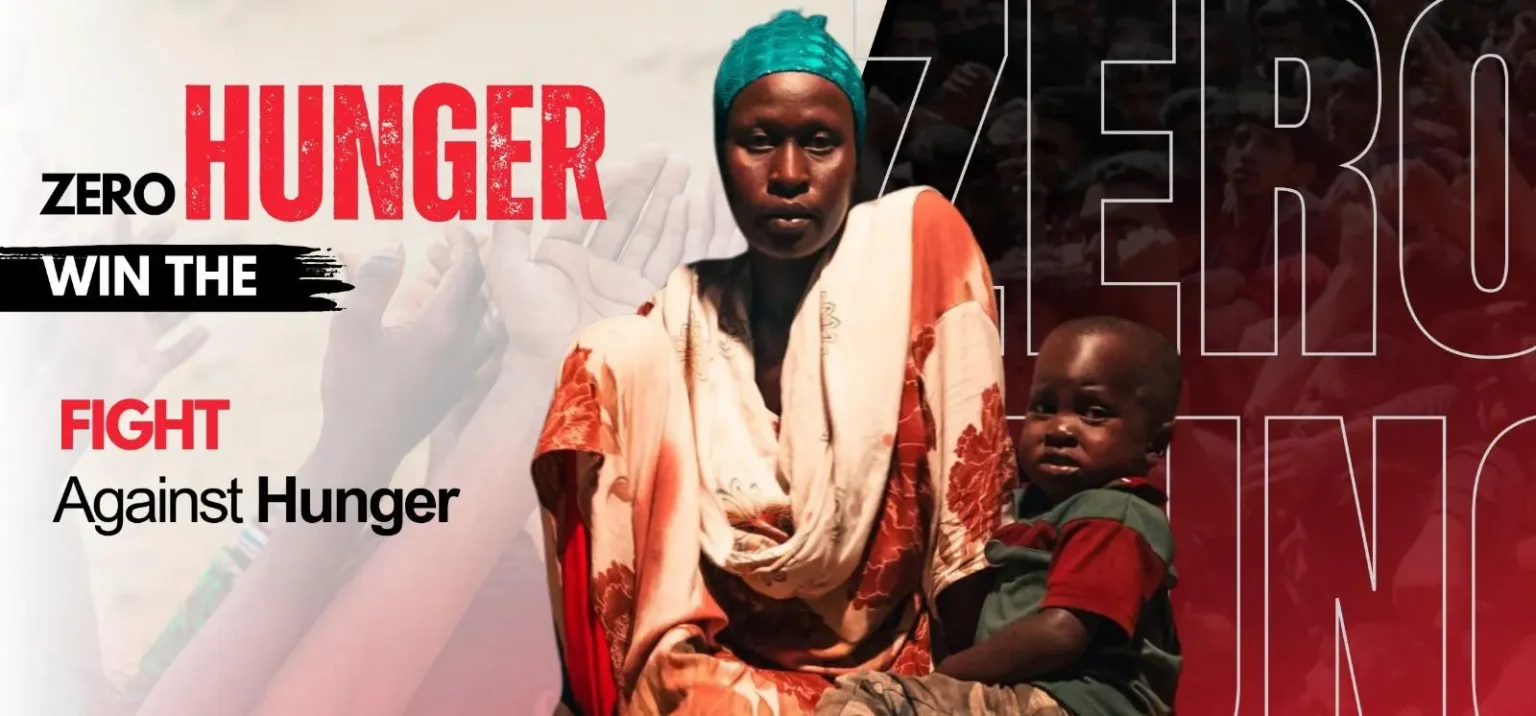
In 2024, roughly 673 million people, about 8.2 percent of the world’s population still went to bed hungry every night. That figure comes straight from the latest United Nations State of Food Security and Nutrition in the World (SOFI) report. While the number dipped slightly from the year before, progress feels painfully slow when you consider that Africa alone now accounts for one in every five people facing hunger. By 2030, projections warn we could still have more than 500 million chronically undernourished people if nothing changes dramatically.
SDG 2, which is known as “Zero Hunger,” is not just another United Nations target on a colorful poster. It is a promise that no child should grow up stunted, no mother should watch her family skip meals, and no farmer should lose everything to a bad season. As someone who has studied global development, I believe developed countries hold the keys to unlocking real change; but only if they pair their resources with smarter strategies and, crucially, draw inspiration from timeless ethical frameworks like those in Islam. The solution lies in blending practical aid, realistic investment, bold policy thinking, and the deep-rooted Islamic commitment to feeding the needy as an act of worship.
Developed states already give billions in humanitarian assistance each year. That is the practical side: shipping emergency food, funding school meals, and supporting refugee camps during crises. It saves lives in the short term, and no one disputes its value. Yet handouts alone cannot end hunger; they often create dependency as well. A more realistic approach is investing in the tools that let developing nations feed themselves. To give you an idea, this includes climate-resilient seeds, drip irrigation systems, soil testing kits, and training programmes that teach smallholder farmers how to double their yields without destroying the environment. Countries like the United States, through initiatives such as Feed the Future, or the European Union, through its agricultural partnerships in Africa, have shown that targeted technology transfer works. When farmers in Kenya or Bangladesh receive better seeds and market access, local production rises and hunger falls without waiting for the next aid shipment.
The theoretical piece is harder but equally essential as well. Developed nations must stop policies that actively hurt poor farmers elsewhere. Rich countries and their agricultural subsidies, billions spent to prop up their own producers; flood global markets with cheap grain and undercut prices for African or Asian growers. In theory, this is about justice: the same countries that benefited most from industrialization from the 17th century onwards and fossil fuels now have a moral duty to help those bearing the worst consequences of climate change and unequal trade. They need to reform trade systems as well, or form policies to forgive the debts of developing countries. One clear example comes from international support in places like Malawi. Organizations funded largely by developed-country donors have helped scale up community-based nutrition programmes and public food distribution systems. In Malawi, for instance, efforts backed by Irish and German development agencies strengthened local health workers and community gardens, reducing child stunting in targeted districts. These are not overnight miracles, but they prove that steady, respectful partnership, not top-down charity can shift the needle.
Now let me turn to something often overlooked in Western development circles: the Islamic approach to Zero Hunger. Islam does not treat feeding the hungry as optional kindness; it treats it as a religious duty baked into the faith’s very structure.
The Qur’an is very crystal clear;
In Surah Al-Ad’Dahr (76:8-9), it praises those “who give food, in spite of love for it, to the needy, the orphan, and the captive,” saying they do so only for the pleasure of Allah.
Another verse (Surah Ma’arij 70:24-25) declares that the righteous recognize a “known right” of the poor in their wealth.
The Prophet Muhammad (SAW) put it even more clearly: “He is not a believer whose stomach is filled while his neighbor goes hungry.” And the Hadith adds that “the best charity is to satisfy a hungry person.”
The practical instruments are equally powerful. Zakat, the obligatory 2.5 percent annual wealth tax, is explicitly earmarked for the poor and needy (Qur’an 9:60). In many Muslim-majority countries, zakat funds now support seed banks, livestock programmes, and micro-farming projects that directly tackle food insecurity. Sadaqah (voluntary charity) and waqf (perpetual endowments) also add flexible layers of support. Modern zakat institutions in Pakistan and Malaysia have begun aligning these tools explicitly with SDG 2. Studies show zakat distributions there have measurably reduced household food insecurity by giving families productive assets rather than one-off meals. Islam also forbids waste: “Eat and drink, but do not waste. Verily, He (Allah) loves not the wasteful” (Qur’an 7:31). In a world where rich nations throw away nearly a third of their food; particularly countries like the US, UK, and France, this ancient command feels urgently modern.
The beauty is that these two worlds, Western development expertise and Islamic ethical frameworks do not compete; instead, they complement each other perfectly. Developed countries could channel some of their aid budgets through reputable Islamic charities or partner with zakat foundations already operating on the ground. Imagine EU or American funding helping scale up zakat-funded climate-smart agriculture in Indonesia (Southeast Asia) or Senegal (Africa). The result would be culturally respectful, locally owned, and spiritually motivating, exactly the kind of sustainable change SDG 2 requires. However, challenges remain. Corruption can swallow aid, climate shocks keep coming, and political will sometimes wavers. Yet none of these excuse inaction. Developed nations have the technology, the capital, and the scientific know-how as well. Islamic teachings provide the moral compass and proven redistribution mechanisms. Together, they form a complete toolkit.
In the end, Zero Hunger is not only a dream for me/us; it is also a test of our collective humanity. If wealthy countries step up with realistic investments and fair policies, and if we all; Muslim and non-Muslim alike; remember that feeding the hungry is both a global responsibility and a sacred duty, then SDG 2 can move from slogan to reality. The 673 million hungry people waiting today deserve nothing less.
The question is no longer whether we can end hunger. It is whether we choose to.