
 Dr. Hassam Ahmed Siddiqi
  Dr. Hassam Ahmed Siddiqi
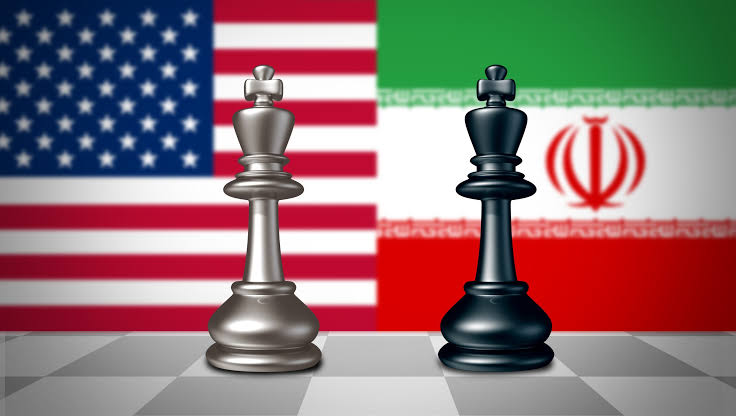
The most significant takeaway from the United States-Iran MoU is not that it is a beginning towards resolving decades of hostility, but that it has fundamentally altered the strategic calculations of every major actor in the Middle East without settling the underlying disputes. The agreement has simultaneously reduced the immediate risk of a regional conflict, reopened a pathway for diplomacy, restored some commercial activity through the Strait of Hormuz while created renewed disagreements over the implementation factor rather than objectives. The current debate is therefore not about whether the MoU exists; it actually does, but about how its provisions should be interpreted by the US and the Iranian, who controls the pace of implementation while, whether this fragile diplomatic pause can evolve into a durable settlement amongst the stakeholders. What makes the present moment particularly significant is that economic data, energy markets, military deployments, and diplomatic engagements all point towards a region entering a phase of strategic competition through negotiations instead of direct confrontation, even as the stakeholders continually prepare for a possibility that diplomacy may eventually fail.
From an economic perspective, the incentives for preserving the MoU are substantial. The Strait of Hormuz remains the world’s most important maritime energy corridor, carrying roughly a quarter of global seaborne oil trade and more than 110 billion cubic meters of LNG in 2025 alone, about one-fifth of all global LNG trade. Some 80 percent of the oil that transits through Hormuz is bound for Asia, which makes Asian economies largest stakeholders in whether the Strait stays open. Any disruption immediately affects freight costs, insurance premiums, shipping schedules and ultimately global inflation while the numbers from the recent conflict make the stakes plain as the global oil supply fell by roughly 10 million barrels per day during the course of the conflict; while the Brent crude prices surged by around 65%; as shipping slowed and uncertainty spiked. Daily vessel traffic through Hormuz, which had averaged 125–150 ships a day before the war, collapsed to as few as 25 ships a day at the height of the conflict.
Since the signing of the MoU, the commercial movement has rebounded sharply but not fully. Oil transit has climbed back toward 20 million barrels per day on the busiest post-agreement days, and Iran itself claims to have exported more than 40 million barrels once the blockade was lifted, compared with virtually no exports during the preceding 50–60 days; a figure Tehran points to as proof of just how much economic value sanctions relief and open shipping lanes restore. Even so, overall traffic remains below pre-conflict averages, demonstrating that markets respond not only to actual disruptions but also to perceived geopolitical risk.
The dependence runs deepest among Iran’s Gulf neighbouring states as roughly 93% of Qatar’s LNG exports and 96% of the UAE’s LNG exports move through the Strait of Hormuz, giving both states a direct economic stake in maritime security. The Strait’s importance also extends well beyond energy, as more than 30% of global urea trade, 20% of ammonia trade, and nearly half of the world’s seaborne Sulphur trade pass through it, meaning a prolonged closure would ripple into global fertilizer supplies and food prices, not just fuel costs. For energy-importing economies such as India, Japan, South Korea and several European states, uninterrupted navigation is therefore not merely a regional issue but a macroeconomic necessity. Indian Prime Minister Narendra Modi’s emphasis on freedom of navigation following his conversation with Iranian President Masoud Pezeshkian reflects these broader concerns, given India’s dependence on Hormuz for roughly 40% of its crude oil imports and nearly half of its natural gas supplies. The economic costs of another prolonged closure would therefore extend far beyond the Gulf, affecting inflation, industrial production and consumer prices across continents.
Yet while both Washington and Tehran acknowledge the importance of keeping the Strait operational, their interpretations of the MoU diverge significantly. The Iranian position is that the current phase of diplomacy is strictly about implementing commitments already contained within the agreement before any broader negotiations commence. Mohammad Bagher Ghalibaf has repeatedly argued that Tehran is prioritizing diplomacy; but remains fully prepared for military confrontation, should implementation fail. Iranian officials maintain that sovereignty over the Strait of Hormuz rests jointly with Iran and Oman and that no external coalition should undertake mine-clearing or maritime security operations without Tehran’s consent. Iran further argues that the MoU grants commercial vessels toll-free passage only for an initial sixty-day period, after which the future administration of the Strait should be negotiated according to the agreement’s provisions. From Tehran’s perspective, fulfilling the existing commitments, including sanctions relief, the lifting of maritime restrictions and implementation of agreed provisions must precede any discussions on a permanent settlement.
Washington’s priorities, while overlapping in certain respects, differ substantially in emphasis. American officials continue to view uninterrupted maritime traffic through the Strait as the immediate strategic objective because prolonged disruption would destabilize global energy markets and impose economic costs on allies and domestic consumers alike. At the same time, US negotiators consider the current MoU an interim framework rather than a final settlement, seeking to use the sixty-day implementation period to negotiate broader understandings on Iran’s nuclear programme, regional security architecture and long-term navigation arrangements. United States has also insisted that economic concessions remain conditional upon measurable implementation milestones, reflecting concerns that previous agreements failed because enforcement mechanisms proved inadequate. Washington therefore appears willing to continue technical discussions through Qatari mediation; while avoiding commitments that would weaken its leverage before broader negotiations begin.
These competing interpretations explain why diplomatic activity has intensified despite the absence of formal direct negotiations. Doha has emerged as the principal venue for indirect engagement, with Qatari mediation allowing both sides to exchange positions while maintaining political distance. Iranian negotiators have been present in Qatar for technical discussions, while US envoys Steve Witkoff and Jared Kushner have simultaneously consulted Qatari officials regarding implementation of the MoU. Such parallel diplomacy illustrates that ceasefires in modern conflicts increasingly depends not merely on grand political summits but on continuous technical engagement involving shipping regulations, sanctions implementation, financial mechanisms and military de-escalation. The distinction between political negotiations and technical implementation has therefore become blurred, making diplomatic progress appear slower than it actually is.
Another notable consequence of the conflict has been the reassessment of Iran’s regional deterrence strategy. For decades, Tehran invested heavily in what became known as the “Axis of Resistance,” relying on allied groups across Lebanon, Iraq, Yemen and elsewhere to project influence while keeping military confrontation away from Iranian territory. During the recent conflict, however, Iran relied more heavily on its indigenous missile capabilities, drone programmes and control over maritime geography than on opening multiple proxy fronts. This shift has generated differing academic interpretations. Some analysts argue that the limited role played by several allied groups demonstrates a weakening of Iran’s forward-defence doctrine, while others contend that it represents a strategic evolution towards homeland-based deterrence. Rather than abandoning regional partnerships, Tehran appears to be integrating them into a broader strategy in which long-range precision capabilities and economic leverage through maritime geography complement rather than replace traditional proxy networks. This transformation reflects adaptation to changing military realities rather than an outright abandonment of previous doctrine.
The economic dimension of reconstruction further complicates these strategic calculations. Implementation of the MoU is expected to unlock financial resources, ease certain economic restrictions and facilitate reconstruction following months of conflict. Whether these resources primarily support domestic recovery and strengthen regional partnerships; remains a subject of considerable debate. Iran faces enormous reconstruction requirements, including damaged infrastructure, industrial facilities and transportation networks. Simultaneously, maintaining regional influence continues to require investment in allied organizations and military capabilities. Historical evidence suggests that states emerging from conflict often attempt to pursue both objectives simultaneously, although resource constraints inevitably force prioritization. Economic indicators such as inflation, employment, currency stability and foreign investment will therefore become critical measures of whether the MoU generates sustainable peace dividends or merely postpones future confrontation.
The regional implications extend well beyond Iran and the United States. Israel continues to express deep concerns regarding Iran’s long-term military capabilities and has maintained military operations against Hezbollah and Hamas despite the broader diplomatic process. Gulf Arab states have cautiously welcomed de-escalation while remaining attentive to the balance of power that emerges from the agreement. Oman and Qatar have enhanced their diplomatic importance as mediators, demonstrating how smaller regional states increasingly shape outcomes by facilitating communication between larger rivals. Meanwhile, European powers such as France continue advocating multinational approaches to maritime security, although Tehran has rejected proposals involving foreign participation in demining operations, arguing that such initiatives contradict the agreed framework governing the Strait. These differing approaches reveal that even among countries favoring de-escalation, considerable disagreement remains regarding the mechanisms through which regional stability should be maintained.
Perhaps the most important lesson emerging from the current diplomatic phase is that neither side appears to view the MoU as the endpoint of negotiations. Iranian officials describe it as a framework; whose provisions must first be implemented before broader talks can proceed. American officials likewise portray it as an interim arrangement designed to create conditions for more comprehensive negotiations while preserving strategic leverage. In effect, both governments have accepted that confidence-building must precede permanent political agreements, even though they disagree on sequencing and obligations. This mutual recognition of uncertainty explains why military preparedness continues alongside diplomatic engagement. Ghalibaf’s assertion that Iran remains ready for war while pursuing dialogue mirrors Washington’s continued emphasis on maintaining deterrence while supporting mediation. Rather than representing contradictory positions, these parallel approaches reflect a shared understanding that negotiations in high-stakes geopolitical disputes are most likely to succeed when both diplomacy and deterrence remain credible.
The significance of the US-Iran MoU lies less in what it has already achieved than in the strategic space it has created. Global energy markets have stabilized without returning to normality. Military confrontation has diminished without disappearing. Diplomatic contacts have expanded without producing a comprehensive settlement. Regional alliances are adapting rather than dissolving. The data therefore point neither to decisive peace nor inevitable conflict but to a prolonged period of managed competition in which implementation, rather than negotiation alone, will determine success. Whether the coming months produce a permanent agreement or another cycle of escalation will depend not only on political will but also on measurable outcomes, encompassing the volume of commercial shipping through Hormuz, the pace of sanctions implementation, the restoration of energy exports, economic recovery within Iran, and the willingness of both parties to convert technical understandings into durable political commitments. Until those indicators point decisively in one direction, the MoU should be understood not as a conclusion, but as the opening chapter of a new and highly consequential phase in Iran-US relations in particular, and the Middle Eastern geopolitics in general.