
 Atika Ameer
  Atika Ameer
“The worth of a state, in the long run, is the worth of the individuals composing it.”
—John Stuart Mill
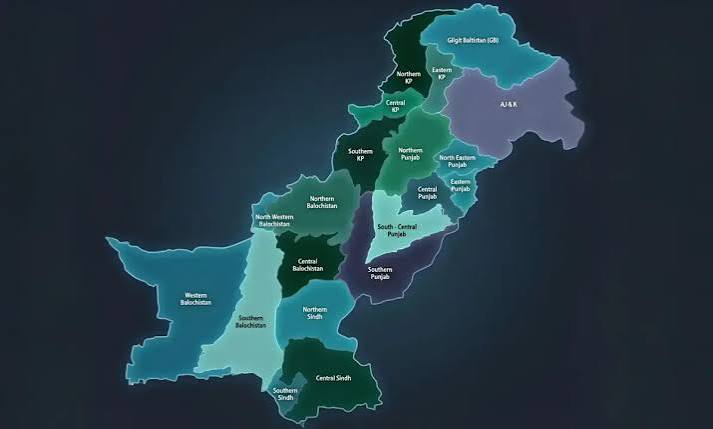
John Stuart Mill believed that people are the prime assets of a state. If the fundamental purpose of the political institutions is to serve the people, then the debate over new provinces in Pakistan deserves to be examined beyond the political slogans and electoral problems. With four administrative units governing the country with a diverse ethnic and cultural population, would creating smaller provinces bring the government closer to the people, or would it merely redraw the already fragile political and ethnic fault lines? For decades, Pakistan has administered itself through four provinces. However, behind these familiar boundaries lies the question of whether these four provinces are sufficient to effectively administer a geographically vast, culturally diverse and administratively complex country? The solution to weak governance and underdevelopment is often presented as dividing the existing provinces into smaller administrative units. But reconstructing the map does not simply mean drawing new boundaries. It is a complex matter which raises questions about political power, ethnic and linguistic identities, resource allocation and administrative costs. But the core question is not whether Pakistan should create new provinces but whether creating them would actually bring the government closer to the people without further polarizing the country.
The question is not new. Pakistan has witnessed repeated calls for new provinces including South Punjab, Bahawalpur and Hazara. A debate also sparked around Islamabad on giving it a provincial status. These proposals do not arise from the same concerns. Some revolve around demands for greater representation while others involve historical identity, political autonomy and the distinctive status of the federal capital. The persistent demands for more provinces cannot be dismissed as merely a political slogan but at the same time creating new provinces is far more complicated than just drawing new provincial boundaries.
India provides a notable example of how territorial reorganisation can effectively address the administrative demands within a federal system. India, through the “States Reorganisation Act” of 1956, has repeatedly altered its internal boundaries and created new states in response to growing ethnic, linguistic, administrative and cultural demands. Although India has repeatedly altered its internal landscape, it cannot be used as a proof that smaller administrative units ultimately produce better governance. Rather, it demonstrates that territorial alteration needs political integration and institutions capable of governing new units.
Supporters argue that smaller provinces will bring the government closer to the people and strengthen the relationship between government and citizens. Smaller units could potentially increase representation by having their own provincial governments, assemblies, bureaucracies and ministries which could improve service delivery. They could also help address the economic and developmental inequalities. Moreover, smaller provinces could grant greater political representation to specific cultural, historical or linguistic identity. They could also increase the local control over resources, potentially reducing conflicts over resource allocation. The demand for South Punjab province is connected to greater political representation and development. Similarly, the demand for a Hazara province is linked to greater administrative access. People from diverse cultural and historical backgrounds can more efficiently address their problems.
Yet, creating more provinces does not automatically promote better governance. New provinces demand new institutions, assemblies and bureaucracy. They require higher administrative costs. Creating more provinces can also produce new tensions along ethnic lines by creating a narrative of “our ethnic group vs theirs” which could potentially weaken national cohesion. Furthermore, political calculations cannot be dismissed, redrawing boundaries could ultimately challenge their existing political power and alter electoral influence. Nonetheless, Pakistan is already politically divided and creating new provinces in such an environment can increase political polarization unless they are created through legitimate and peaceful democratic process.
The Constitution of Pakistan provides protection to the provincial boundaries. Article 1 of the constitution defines Pakistan’s territories, including the four provinces and Islamabad Capital Territory. Similarly, under Article 239(4) of the constitution, if the provincial boundary of a province is going to be changed, the relevant Provincial Assembly must approve it with at least two third majority of the total membership of the relevant Assembly. Therefore, the question merely is whether the reorganization of provincial territories would pave the way towards better governance. Alternatives such as stronger local governments, greater budget allocation and improved administrative institutions must also be examined.
Eventually, Pakistan’s map must be shaped through constitutional means, political consultations and citizen consensus. A smaller province does not automatically guarantee better governance, just as a larger province does not necessarily create administrative problems. India’s example demonstrates that boundaries can be altered in response to governance needs, but the territorial reforms must be accompanied by adequate institutional capacity. As Mill points out, the worth of a state is measured by the worth of its citizens. Pakistan’s debate over new provinces must be about strengthening the institutions to better serve its citizens.