
 Hafsa Imran
  Hafsa Imran
This article examines religious extremism and the rise of militancy in Pakistan, highlighting its deep-rooted societal impact and pervasive influence at the grassroots level. The sharp rise in terrorism indicators correlates with patterns of radical indoctrination, particularly within certain segments of madrasa networks, alongside the mobilization of youth through the misinterpretation of jihad as a sacred obligation. Underprivileged communities are especially vulnerable, often exploited in the name of extremist ideologies. Pakistan, as a state founded on Islamic principles, reflects in the Preamble of the 1973 Constitution, which asserts that sovereignty belongs to Allah Almighty, with authority exercised by the people as a sacred trust.
Conversely, historical and structural factors have contributed significantly to the rise of religious extremism. Following the 1979 Soviet invasion of Afghanistan, the Afghan Mujahideen were mobilized under the banner of jihad, supported by Operation Cyclone, which provided training, weapons, and financial resources. During the 1980s and 1990s, funding from the United States and Saudi Arabia was channeled into religious institutions, where some madrasas became hubs for recruitment and ideological conditioning, thereby intensifying radicalization. Over time, these dynamics transformed regions such as Khyber Pakhtunkhwa and Balochistan into focal points of militant activity, particularly for groups like the Tehreek-i-Taliban Pakistan (TTP), which seeks to impose its interpretation of Shariah law through sustained violence, challenging the Westphalian concept of state sovereignty.
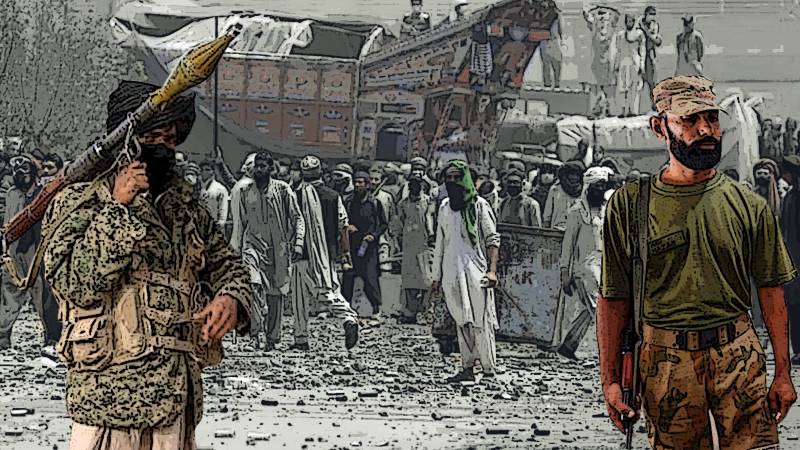
Following the Taliban’s return to power in Afghanistan in 2021, the TTP has expanded both strategically and operationally, intensifying attacks against the Pakistani state. Militant incidents have risen sharply, with 98 recorded in 2021, 121 in 2022, 374 in 2023, 470 in 2024, and 699 in 2025, indicating a clear upward trajectory. According to the Pakistan Institute for Peace Studies (PIPS) 2025 report, there has been a 70% increase in militant activity, with 95% concentrated in Khyber Pakhtunkhwa and Balochistan. Key districts such as Dera Ismail Khan, Tank, Lakki Marwat, Bannu, and Karak have emerged as epicenters of violence, where non-state actors maintain operational strongholds. In these areas, certain madrasas act as recruitment pipelines, facilitating structured ideological indoctrination.
It is important to note that madrasas traditionally serve a vital role in religious education and moral development, particularly for economically disadvantaged populations. However, a minority have been implicated in fostering intolerance and militancy. These institutions often provide free education, attracting underprivileged youth, who may then be subjected to ideological conditioning. Through systematic persuasion and selective religious narratives, some individuals are led to perceive participation in violence as divinely sanctioned, with promises of spiritual reward reinforcing recruitment efforts. The TTP has further amplified its outreach through propaganda, notably the “Rasm-e-Mohabbat” campaign launched in 2023, which glorifies deceased militants and constructs narratives of heroism and legitimacy. Under the leadership of Noor Wali Mehsud, the group has adopted organizational and tactical frameworks similar to the Afghan Taliban, enhancing its operational coherence and recruitment capacity, particularly among youth facing poverty and limited socio-economic opportunities.
Educational deprivation remains a critical driver of radicalization, with approximately 39% of children aged 5–16 out of school, creating a significant vulnerability gap. As of the 2023–2024 economic census, released in 2025, there are over 36,000 madrasas operating in Pakistan, educating millions, particularly in rural areas. While 17,738 are officially registered, a substantial number remain unregulated, posing challenges to state oversight. In response, the government introduced the Societies Registration (Amendment) Act, 2024, also known as the Madrasa Registration Bill 2024, mandating formal registration and financial transparency under federal or provincial authorities. Religious extremism poses a significant threat to Pakistan’s socio-political stability, with far-reaching economic and governance implications. In a diverse society, political actors may instrumentalize religion to consolidate support, often polarizing public opinion. For instance, the Islamabad Capital Territory Child Marriage Restraint Bill 2025 sparked intense debate, with opposition from religious political groups such as JUI-F, whose leadership framed the legislation as externally influenced.
Furthermore, religious radicalization contributes to the misuse of blasphemy laws, often resulting in mob violence and extrajudicial actions. In a highly conservative social context, accusations, frequently unsupported by evidence can lead to lynching and widespread unrest. Individuals advocating legal reform or moderation often face severe backlash. A notable example is the assassination of former Punjab Governor Salman Taseer, which underscores the risks associated with dissenting views. Additionally, practices such as honor killings and informal parallel justice systems further undermine the rule of law, creating systemic instability and weakening state authority.
Addressing these challenges requires a comprehensive and multi-dimensional approach. De-radicalization initiatives should focus on rehabilitating individuals already involved in militancy, while counter-radicalization strategies must prioritize education, awareness, and community engagement. Expanding access to quality education and economic opportunities is essential to reducing vulnerability to extremist recruitment. Simultaneously, a robust intelligence and security framework, supported by targeted military operations, is crucial for dismantling militant networks and securing long-term stability. Such measures are not only vital for strengthening state authority but also for enhancing investor confidence and fostering sustainable development.