
 Aqsa Batool
  Aqsa Batool
In our society, the word “honour” is used a great deal. It sounds strong and respectful, but sometimes it is used in deeply wrong ways. Recently, incidents from different parts of Sindh, where young lives were lost in the name of so-called honour, once again brought this issue into public conversation. Such incidents compel one to think seriously about what honour actually means in our society.
One who belongs to Sindh and has observed life there can see how traditions and social pressure still shape many people’s lives. In some areas, the influence of the wadera system is still felt in one way or another. People care deeply about reputation, family name, and what society will say. Because of this pressure, personal choices, especially those made by women and girls are sometimes not accepted or respected.
In recent years, several tragic incidents from rural Sindh have highlighted how serious this issue remains. In districts like Ghotki, Jacobabad, and Sukkur, cases have been reported where young women were killed simply because they chose to marry someone of their own choice. In some situations, even tribal gatherings or informal systems of justice supported such actions rather than condemning them. These incidents reveal how deeply rooted these beliefs are where community approval sometimes overrides basic human rights. However, this issue is not limited to Sindh alone. Similar cases are also reported from Punjab and other parts of Pakistan, which shows that this is a broader social problem, not merely a regional one. Human rights reports and news data suggest that every year hundreds of women in Pakistan lose their lives in honour-related incidents. In most cases, the victims are women, which clearly reflects a gender-based pattern.
Punjab, despite being more urbanized in many areas, has also witnessed heartbreaking cases. In cities like Lahore and Multan, as well as in rural regions, families have taken extreme measures against daughters or sisters over marriage choices or social behaviour. One widely discussed case involved a young social media personality who was killed by a family member, bringing national attention to the issue. Such cases remind us that even modernization and urban exposure do not automatically eliminate deeply rooted mindsets. Looking at the bigger picture, honour-based violence is part of a larger pattern of gender-based violence in Pakistan. Reports by organizations like the Human Rights Commission of Pakistan (HRCP) regularly highlight domestic violence, forced marriages, and the lack of protection for women as serious concerns. This shows that the problem is not confined to one form of violence, but reflects a broader social attitude toward women’s choices and freedoms overall.
Another troubling aspect is how silence and fear prevent many cases from even being reported. In both Sindh and Punjab, there are likely many incidents that never make it to the news. Families often choose to conceal such matters to protect their image, and victims rarely receive justice. This silence allows harmful practices to continue unchecked, making the issue even more complex and difficult to address. But the question remains simple: can honour truly exist if it leads to harm? Honour should mean respect, dignity, and good character. It should not mean control over someone’s life. When a young girl makes a decision about her future, education, or marriage, it should be seen as her right. Instead, in some cases, it becomes a matter of family reputation, which creates unnecessary pressure and conflict. There are also cases where men become victims, although these are less frequently reported. In some situations, couples who choose to marry against their family’s wishes are both targeted. This shows that the problem is not only about women, but about control and rigid social expectations placed on individuals. However, the impact remains heavily unequal, with women facing the greater share of violence and restrictions.
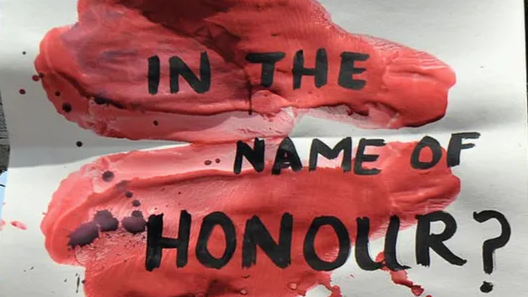
What is even more painful is that such actions are sometimes justified in the name of honour. This is something very difficult to understand. How can taking a life ever be linked with honour? If honour needs violence to be protected, then perhaps we need to seriously rethink what honour actually means. In reality, many people live under the constant fear of society and judgment. They feel trapped between what they personally believe and what society expects from them. This fear sometimes becomes stronger than basic humanity. And that is where the problem starts. Social pressure also plays a powerful role in shaping these actions. In close-knit communities, people often fear being judged or isolated if they go against traditional norms. Instead of supporting individuals, society sometimes reinforces harmful expectations. This creates an environment where people feel they have no choice but to act in ways that align with these norms, even if those actions are deeply unjust.
Pakistan already has laws against honour-based violence, and amendments have even been made to close legal loopholes. But laws alone are not enough. The real change has to come in thinking. The beliefs that are passed from generation to generation without questioning need to be looked at again. Not everything traditional is always right. It is also important to ensure that laws are properly implemented. In some cases, weak enforcement or social influence affects the legal process. Justice delayed or denied sends a message that such actions can continue without consequences. Strengthening institutions and ensuring accountability is an important step toward change. Education and awareness can help, but change will only come when people start questioning these ideas openly. When families start choosing understanding over control, and dialogue over silence, things can slowly improve. Young people, especially, have a role to play. With greater access to education and information, they can challenge outdated beliefs and promote more balanced perspectives within their families and communities. Even small conversations at home can begin to shift mindsets over time.
Media and society should also engage with these issues more honestly, not just as news stories, but as serious social problems. Because silence only allows the cycle to continue. Religious and community leaders can also contribute positively by emphasizing values of compassion, justice, and respect for life. When influential voices speak out against the misuse of “honour,” it can help reshape public understanding and reduce the social acceptance of such violence. At the end of the day, honour is not about controlling others. It is about respecting life. It is about dignity, not fear. And until society truly understands this, incidents like these will keep reminding us that something is still deeply wrong in how we think as a people.