
 Saif Ullah
  Saif Ullah
If we see the reasons behind the creation of the country, one major factor was the outrages and injustices committed by both Hindus and the British against Muslim communities. But there was another important thing to notice: the concept of Quaid-e-Azam. If we carefully observe the speeches delivered by him, it becomes clear that he wanted a secular state where every nation and religious community could survive honestly and peacefully.
Chiefly, from 1948 to 2026, Pakistan has experienced almost 33 years of dictatorship and has had 33 prime ministers, including both elected and caretaker governments. Considering the kind of power-hungry people who often led the state, it almost seems like a miracle that the country has survived this long. There are three main political parties in Pakistan with different slogans: PPP said, “Democracy is the best revenge” and “Roti, Kapra aur Makan”; PML-N said, “Vote ko izat do” (Respect the vote); and PTI promoted the idea of a “State of Madina.” Another issue is that almost no democratic government was able to complete its full five-year term.
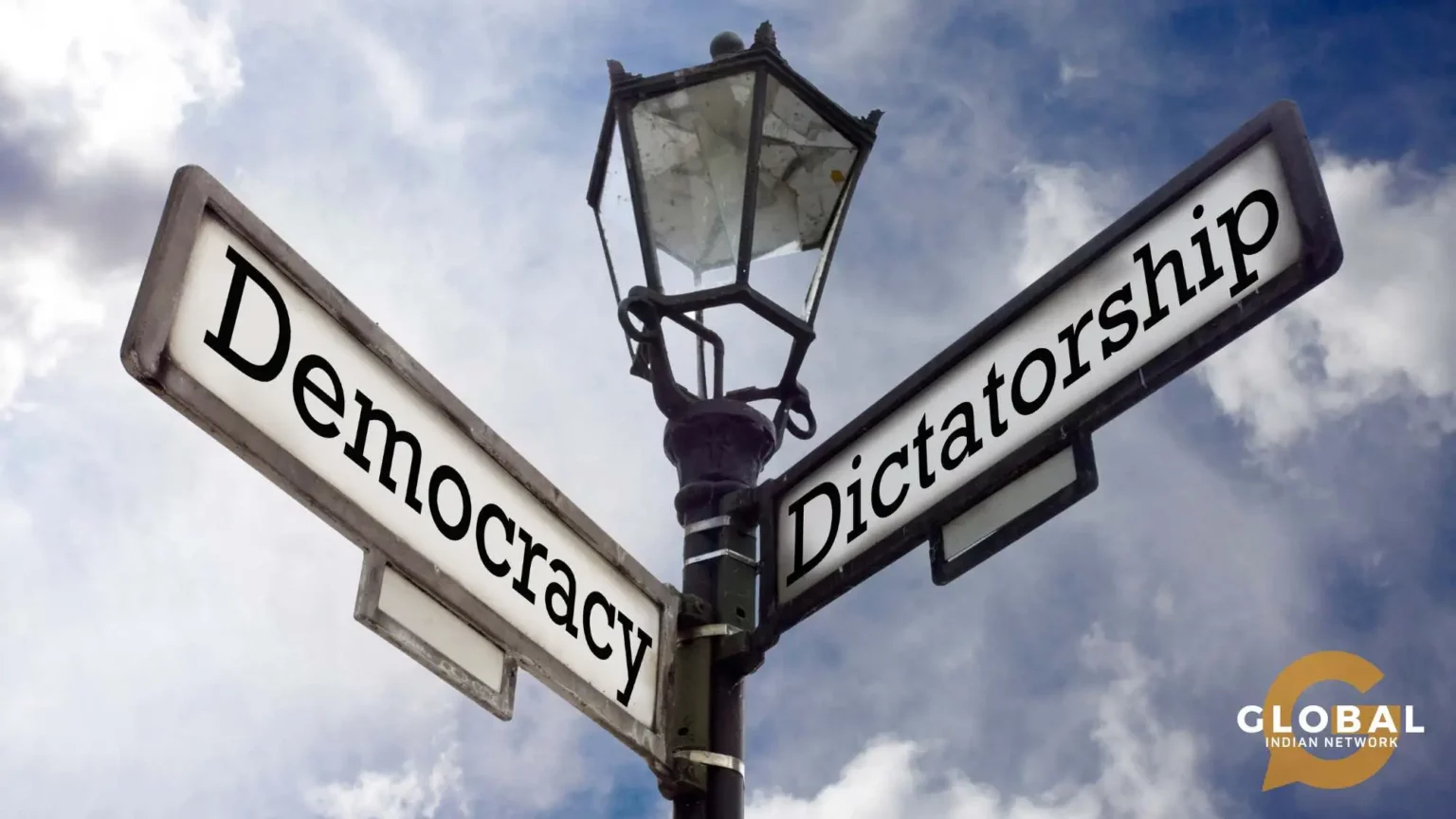
On the other side, during dictatorship eras, our military leadership was often considered better than many cheap politicians in terms of national progress. They were highly skilled both on and off the ground. However, the real problem appears when democracy is discussed. Pakistan is officially a democratic state where people should have the right to choose their leadership freely. Dictatorship, in many ways, means the death of democracy. Right now, the 27th Amendment has almost killed democracy within the state.
Let’s talk about the people of Pakistan. Human rights violations have continued since independence. It does not matter who is running the country; what matters is how they are running it. The War on Terror has never truly ended in Pakistan, and the border areas of the country continue to suffer, just as Muslims suffered during the subcontinent era. The question is: what does the state want to achieve? And what will be achieved when such a huge number of people are becoming ready to reject or erase the state itself? I am not talking about whether the government is good or bad. I am talking about the people; they are our own people. If the state wants to achieve something through force, then naturally the reaction will also be harmful. Therefore, the government must hold table talks with those people suffering in border regions such as Balochistan, KPK, Gilgit-Baltistan, and others. If the government truly wants a stable state, then the only option is inner diplomacy and internal peace. Military operations and outrages may temporarily stabilize situations, but in the long run they never truly solve the issue. Instead, they create ideologies within the state that become anti-state sentiments.
Commonly, it is hard to believe that the state is unable to resolve these issues. Again, dictatorship eras in Pakistan may be considered progressive periods from the perspective of national interest. The golden age of Pakistan’s history is often considered the era of General Ayub Khan. At that time, Pakistan was even able to provide loans to other entities around the world. The reason was that he had enough time to execute his plans on the ground, and he did so effectively. For example, Pakistan’s industrial sector during that period was counted among the strongest in Asia. Similarly, General Pervez Musharraf, during the War on Terror, also represented Pakistan’s international status positively. From the perspective of national interest, the economic structure improved due to involvement in the War on Terror. However, the problems created by those factors are still continuing today. Internal peace was damaged by those home-ground battles, and that damage still exists in the mindset of people across the country. Recently, suicide blasts occurred inside a mosque within the capital territory (6 Feb 2026). Similar incidents continued in North Waziristan (6 March 2026), Bannu (21 Feb 2026), and at the Quetta railway station (Jan 2026), according to Dawn News. These are among the consequences of entering the War on Terror. The main lesson is that Pakistan should fight its own war, not others’. If we observe developed countries in the modern age such as China and North Korea, their strategy has largely been to focus on self-development and stay out of foreign wars. They mostly prefer diplomacy.
Conclusively, the state must not ignore internal peace. The only way to achieve this is by raising the flag of justice among all people, not only among the elite class. If we look back into history, Muslim empires were not destroyed mainly on battlefields; rather, their enemies divided them through sub-nationalism, religious divisions, racism, and distinctions such as Arabs and non-Arabs. Unfortunately, these divisions have also become part of our society today. Therefore, the state must promote solution-oriented messages before the public that create awareness and unity. The government must ensure fairness in every case, because fairness builds trust between the public and the state. Democracy in Europe cannot be applied exactly the same way in Asia. Often, we try to copy their systems without fully understanding or following them properly. One of the biggest drawbacks is the mixing of Islam with European democratic concepts without creating a balanced structure suitable for our society. Every system has its own rules. Similarly, if fairness and justice are properly implemented, it will become a successful step toward strengthening the state. No doubt, if a socialist dictator comes in the future of Pakistan, it may become a better turning point for the country.