
 Dr. Hassam Ahmed Siddiqi
  Dr. Hassam Ahmed Siddiqi
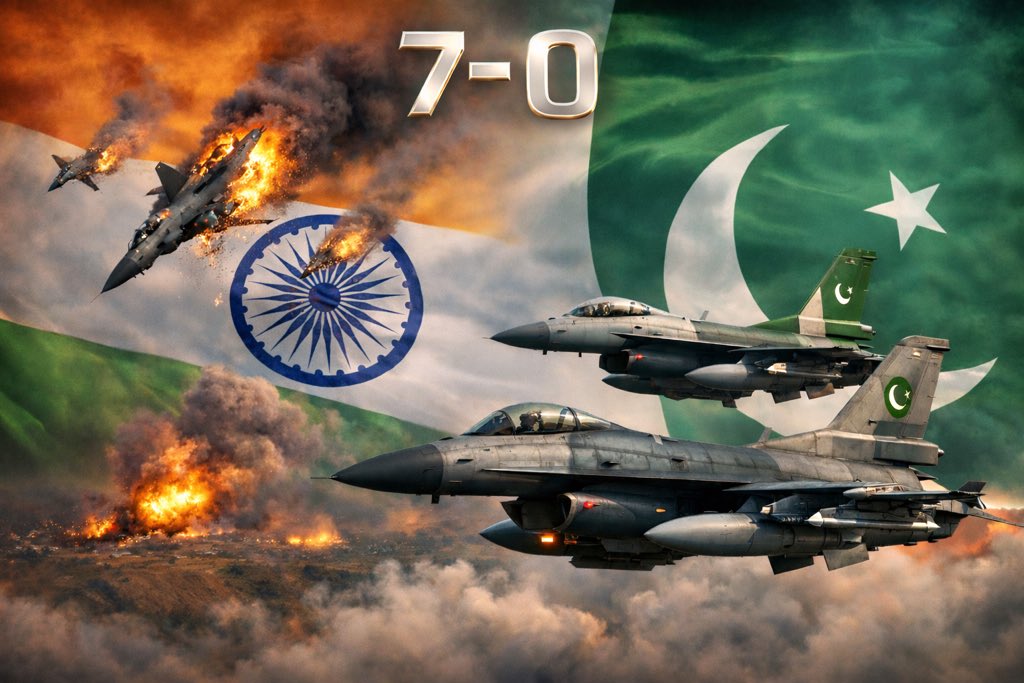
Clear to launch, Clear to shoot, I Want Rafaels. That was Air Chief Marshal Zaheer Ahmed Baber Sidhu, who gave a go ahead to PAF 15 Squadron, after India carried out its first missile attack in Bahawalpur on the night of 6th and 7th May, 2025. Responding to ACM Sidhu’s call, the Shaheens responded with ‘Allah-o-Akbar’, and went airborne after a coward IAF, who despite their war mongering politico-military zeal and might, were brave enough to attack at night. The atmosphere inside the Command & Control centre was electric with tension, every second stretching into eternity. Radar screens flickered as 75 technologically advanced Indian Air Force jets, including the SU-30s, Rafales, and MiG-21s closed in, signaling the onset of what became the most intense aerial battle in Indo-Pakistan history. Across the line, the Shaheens of Pakistan Air Force stood resolute. With a formidable fleet of 42 fighters, including the J-10Cs, JF-17 Thunder Block IIIs, and F-16s; they were not just prepared for battle, but for a defining moment in the history of Pakistan Air Force. Hearts steady and spirits unshaken, the Shaheens were ready to show the world that victory is not forged by numbers alone, but by unwavering faith in Almighty Allah, unmatched skill, and the excellence of capabilities.
Pakistan was stunned; yet it had complete faith in the abilities of its Armed Forces. There was a blackout in Muzaffarabad and the surrounding areas; while people across Pakistan were waiting to hear about the response of Pakistani Forces. The dogfight between PAF and IAF was pursued; while the Air Defence on ground was backing the pilots through AWACS‑like coordination and early‑warning radars. PAF employed a mixture of loose formations, terrain masking, and coordinated missile salvos to compel IAF aircrafts into defensive postures, after which short‑range engagements and additional BVR shots followed. The half hour of intense battle in the realm of Air Defence provisioned the pilots of J-10C a rare chance to down the IAF jets with their PL-15 BVR missiles. PL‑15‑class Long‑Range Air‑to‑Air Missiles (LRAAM) gave PAF fighter pilots a significant BVR reach advantage over IAF weapons. Indian radars were completely jammed, as their four Rafaels were downed. Their confidence was shaken to the core and their pilots were only looking to return safely to their bases; yet the destruction wasn’t over. IAF Rafales carried MICA and other medium‑range air‑to‑air missiles; nevertheless, their radar and datalink integration did not fully counter the PL‑15’s energy and range in this engagement. PAF pilots downed three more Indian jets including 1 MiG-29, 1 Su-30 and 1 Mirage 2000 and a USD 9.5 million Heron UAV, which created a fright and panic in their fleet on air and ground.
The downing of Rafaels also brought down the arrogance and pride of Prime Minister Modi and Defence Minister Rajnath Singh. Approximately 20-25 more Indian aircrafts could have been downed that night, if ACM Sidhu hadn’t demonstrated wisdom and adopted containment strategy by timely ordering the fleet to return, saying that the inflicted damage was enough. The entire PAF’s air fleet returned safely, and performed Sajda-e-Shukar on the runway. Pakistan had shown the world that winning on the battlefield was contingent on faith on Kalma-e-Haq, courage, capabilities and skillset. In battles, expensive and technologically advanced weapons don’t guarantee the success; as the words of Air Marshal Aurangzeb, rightly fitting the plot echoed with a striking clarity. “Rafael is a potent aircraft, if employed well.”
The morning of 7th May was jubilant for Pakistanis. DG ISPR, Lt. General Ahmed Sharif Chaudhry, held a press conference in Rawalpindi, and categorically warned India to wait for Pakistan’s response. However, there was a complete silence in the Indian camps after this humiliating defeat. Even the war-mongering Indian media, which is usually loud, defiant, and unyielding, fell into an uneasy silence. Studio lights still burned and anchors still spoke; yet, the certainty in their voices had faded. Faced with an undeniable reality, they struggled to shape a narrative, searching for words that could mask what had already become evident. For once, the headlines hesitated, the rhetoric softened, and behind the scenes lingered a single, unspoken question: how do you explain defeat to a nation that was promised victory? For the next two days, the Indian aircrafts were unable to take to the skies. Yet, it was far from over. In an attempt to erase its humiliation and embarrassment, the Indian forces resorted on 9th May to cowardly drone attacks targeting civilian populations, with innocent citizens becoming the victims. Responding to the Indian aggression, Pakistani Forces retaliated back on the morning of 10th May, as Chief of Defence Forces, Field Marshal Syed Asim Munir initiated Operation Bunyanum Marsoos, and what the world witnessed thereafter was nothing short of a nightmare for the adversary.
The night of 6th and 7th May clearly showed the world that wars are no longer confined to traditional sphere, rather they are decided on the bases of technological advancement, precision, speed, and decisive superiority. The resolute and bold leadership of Zaheer Ahmed Baber Sidhu has transformed the vision of the Pakistan Air Force, as Pakistan delivers a clear, resounding message to the world that, dominance in the skies is not secured by numbers alone, but through the fusion of rigorous training, advanced missile systems, drones, network-centric warfare and intelligent technologies. As Pakistan remembers the message of its founder, Quaid-e-Azam Muhammad Ali Jinnah, that he delivered on 13th April, 1948 at Royal Pakistan Air Force Academy, ‘A nation that lacks a strong air force is at the mercy of any aggressor’. PAF stands resolute and firm, with absolute certainty; its will forged in vigilance to deter any external threat that dares even to cast its gaze upon Pakistan.